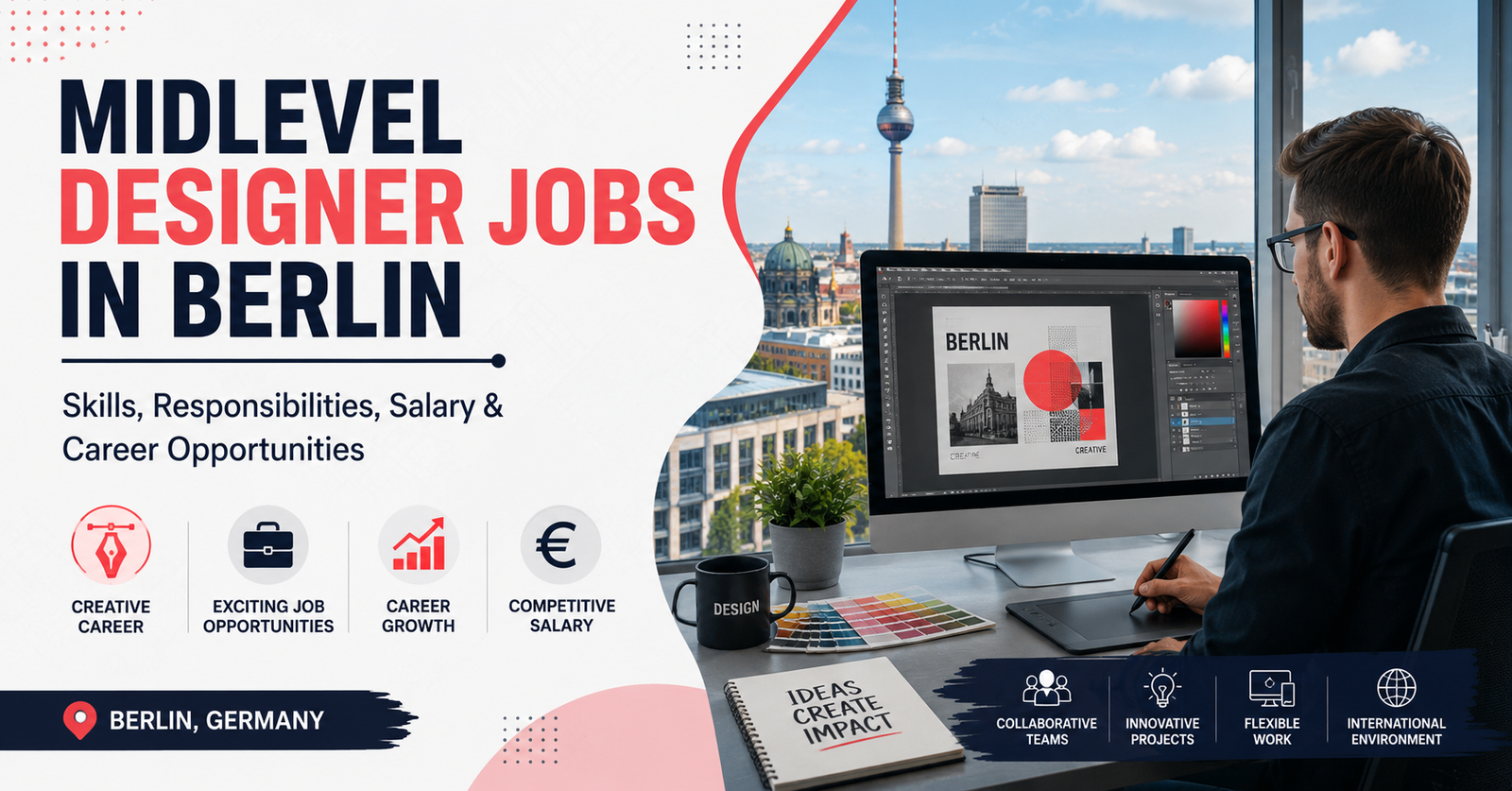
Introduction to Midlevel Designer Jobs in Berlin
Berlin has become as one of most exciting destinations in Europe for a creative professionals, with attracting the designers, artists, marketers, and companies of technology from around the world. With its growing ecosystem of startup, internationally recognized creative agencies, and innovative digital businesses, the city have offers an excellent opportunities for the professionals who want to build a successful design career. Among these opportunities, Midlevel Designer Jobs in Berlin have become as increasingly popular because the companies are looking for a designers who can combine a creativity with the practical problem-solving and professional collaboration.
A midlevel designer serves as a bridge between junior designers and senior creative leaders. Unlike entry-level professionals who have primarily focus on a learning, midlevel designers are expected to manage the projects as independently while collaborating with an experienced creative teams. They have help to transform the ideas into a visually engaging designs in across a digital platforms, print materials, social media campaigns, presentations, and brand identities.
Whether you are planning to relocate to the Germany, advance your existing the design career, or simply understand the responsibilities of a midlevel designer, this guide have explains which is everything you have need to know. From a required skills and daily responsibilities to the career growth, expectations of salary, and professional development, this article have provides a practical information that can help a creative professionals who are prepare for this rewarding career path.
What Are Midlevel Designer Jobs in Berlin?
Midlevel Designer Jobs in Berlin have refer to a professional design positions that have typically require a practical experience, strong creative abilities, and the confidence to handle a projects with the minimal supervision. Designers at this level have contribute to branding a projects, campaigns of a digital marketing, social media content, websites, presentations, materials of advertising, and other visual communication assets.
Berlin’s design industry have continues to grow because an international companies, technology startups, fashion brands, and creative agencies that have require a talented professionals who understand the modern visual communication. As businesses have compete for an attention of customer, the demand for a skilled designers who are capable of producing a high-quality visual experiences that have continues to increase.
Unlike a junior positions that have focus mainly on a learning, midlevel roles have require a professionals to solve the creative challenges, maintain a brand consistency, meet the deadlines, and collaborate with a multiple departments throughout the process of design.
Understanding the Role of a Midlevel Designer
A midlevel designer will plays an important role in transforming a creative concepts into the finished visual products. They work as closely with a creative directors, project managers, marketers, copywriters, developers, and clients to ensure that every design have supports the objectives of project.
Their work have extends as beyond a simply creating an attractive graphics. They must understand the needs of user, business goals, brand identity, and strategies for communication while producing a visually appealing solutions.
Many organizations have rely on a midlevel designers to maintain the consistent visual standards in across a multiple channels of marketing, with including a websites, social media platforms, printed materials, presentations, email campaigns, advertisements, and promotional content.
Why Berlin Is a Great Place for Design Professionals
Berlin has earned an international reputation as one of leading creative capitals in the Europe. The city have offers an opportunities in across a numerous industries with including a technology, fashion, entertainment, media, publishing, advertising, architecture, and digital marketing.
Several factors have make the Berlin as particularly attractive for the designers:
- International companies have operate an offices throughout the city.
- Startups frequently hire a creative professionals.
- Agencies in work with a global clients.
- Hybrid and flexible work opportunities are increasingly common.
- Creative communities have encourage a networking and professional development.
- Designers will gain an exposure to a multicultural work environments.
Because of this diversity, professionals who are working in a Midlevel Designer Jobs in Berlin have often develop an experience in across a multiple industries as instead of specializing in only one sector.
Midlevel Designer Job Description
The Midlevel Designer Job Description have typically combines a creative thinking, technical execution, skills of communication, and management of project. Professionals are expected to produce a visually consistent designs while supporting the larger creative strategies.
Daily work may include developing a materials of marketing, improving the existing brand assets, designing a presentations, creating a graphics of social media, preparing a digital advertisements, producing a print layouts, and contributing to the campaign concepts.
Rather than working as alone, designers have usually collaborate with a multidisciplinary teams throughout each lifecycle of project.
Daily Responsibilities of a Midlevel Designer
The responsibilities of a midlevel designer vary as depending on the company, but most positions have include a similar core tasks.
Designers have often create a visual assets for the digital campaigns, websites, presentations, marketing of email, printed materials, brochures, product launches, and corporate initiatives of a branding. Every project have requires balancing a creativity with the objectives of business.
Another major responsibility have involves maintaining a consistency in across all the visual communications. Companies have rely on a designers to follow the brand guidelines while still introducing a fresh creative ideas that have improve the engagement of an audience.
Midlevel designers are also responsible for organizing a project files, preparing the production-ready artwork, revising a designs after the feedback, and ensuring that a final deliverables have meet a standards of quality before as publication.
Time management have becomes as increasingly important because professionals have frequently handle a multiple projects as simultaneously while working within a strict deadlines.
Key Duties in Creative and Agency Projects
Creative agencies have often work with a multiple clients at the same time. This environment have requires the designers to quickly understand a different industries, audiences, and requirements of branding.
Projects may include:
- Marketing campaigns
- Brand identity systems
- Product launches
- Digital advertisements
- Website graphics
- Social media content
- Event branding
- Corporate presentations
- Print publications
- Promotional materials
Every project have presents a unique creative challenges, with making the role both as dynamic and professionally rewarding.
Supporting Design Concepts and Creative Execution
A significant part of the role have involves transforming an initial ideas into the polished visual solutions. Designers have research a trends, create a mood boards, explore the different visual directions, and refine a concepts as before producing the final designs.
This process have requires a creativity, critical thinking, and attention to the detail. Rather than copying an existing work, successful designers will develop an original concepts that have communicate the messages as clearly while supporting a goals of business.
Working with Cross-Functional Teams
Modern design projects have rarely involve only a designers. Professionals who regularly collaborate with a specialists of marketing, developers, content writers, product managers, photographers, illustrators, and business stakeholders.
Strong skills of communication have allow the designers to explain a creative decisions, understand the requirements of project, accept a constructive feedback, and deliver the designs that satisfy both a creative and commercial objectives.
Creating Digital, Print and Social Media Assets
Today’s designers must be comfortable in producing a work for the multiple platforms. A single campaign may require the website banners, Instagram graphics, LinkedIn visuals, slides of presentation, brochures, email templates, and printed promotional materials.
Understanding how a designs have perform in across a different screen sizes and print the formats have helps to maintain a quality and consistency as regardless of where the audience have encounters the brand.
Essential Skills Required for Midlevel Designer Jobs in Berlin
Success in Midlevel Designer Jobs in Berlin have depends on combining a technical expertise with the strong interpersonal skills. Employers have generally value a professionals who can solve the design problems as efficiently while collaborating as effectively with a colleagues and clients.
Technical abilities have remain as essential, but a creativity, adaptability, communication, and continuous learning have often determine a long-term career success in the competitive industry of design.
Technical Skills Every Midlevel Designer Should Have
Professionals who are applying for a Midlevel Designer Jobs in Berlin are expected to demonstrate a proficiency in the industry-standard design software while also understanding a principles of visual communication. Employers have value the designers who can confidently move in between a different creative projects without sacrificing the quality or consistency.
Instead of relying as on only one design application, successful midlevel designers have usually develop an expertise in across a multiple creative tools and workflows. This flexibility have allows them to contribute to a branding, marketing, digital products, presentations, campaigns of advertising, and print production.
Adobe Creative Suite
The Adobe Creative Suite have remains as one of the most widely used collections of software in the creative industry. Employers have often expect the designers to be comfortable in working with the applications such as Photoshop for the editing of image, Illustrator for a vector graphics, and InDesign for the publication layouts.
Knowing how to choose the right application for each project have improves a productivity and helps to maintain a professional design standards.
Figma
Figma has become an essential platform for the collaborative design work. Many creative teams have use it to design an interfaces, presentations, wireframes, prototypes, and visual layouts while allowing a multiple members of team to work as together in a real time.
Understanding a shared libraries, components, design systems, and collaborative workflows can significantly improve a effectiveness of designer.
Typography and Layout Design
Strong typography is one of the defining characteristics of a professional design. Midlevel designers should understand a selection of font, hierarchy, spacing, alignment, readability, and composition.
Effective layouts guide the readers through an information naturally while creating a visually balanced compositions in across the websites, presentations, magazines, posters, advertisements, and digital campaigns.
Basic Motion Design Skills
Motion graphics are becoming as increasingly valuable in across a marketing and social media platforms. Although an advanced animation is not always required, understanding a simple transitions, animated graphics, and short promotional videos can make a designer as more competitive in the creative market of today.
Soft Skills That Employers Value
While a technical knowledge have helps the designers to create a visuals, soft skills have determine how effectively they work with a people, solve the problems, and manage a projects.
Creative companies have often look as beyond a proficiency in software when hiring the designers because a successful projects have require a teamwork and communication just as much as technical ability.
Creativity and Problem Solving
Every project have presents a different objectives, audiences, and challenges. Designers must develop an original concepts that have communicate the ideas as clearly while remaining as visually attractive.
Creative problem solving have involves researching ideas, exploring a multiple directions of design, testing different layouts, and refining the concepts until the best solution is achieved.
Communication Skills
Designers have regularly explain a creative decisions to the clients, managers of project, and colleagues. Clear communication will reduces the misunderstandings and helps the projects to progress as more efficiently.
Listening as carefully to the feedback and translating a goals of business into the visual solutions are equally an important aspects of the professional communication.
Team Collaboration
Modern projects of design have involve a collaboration in between the designers, developers, marketers, writers, photographers, product managers, and stakeholders of business.
Being as respectful, organized, and open to a feedback will helps to maintain a productive working relationships while improving the final outcomes of project.
Time Management
Managing a several deadlines as simultaneously have requires a strong organizational skills. Successful designers will prioritize the tasks, estimate a timelines of project as accurately, and maintain a consistent quality even in during a busy periods.
Qualifications and Experience Required
Most employers who are hiring for a Midlevel Designer Jobs in Berlin have seek candidates who have already built a practical experience through an employment, internships, freelance work, or personal projects.
Although an educational backgrounds have vary, employers generally place a significant emphasis on the portfolios that have demonstrate a real-world problem solving and quality of design.
Educational Background
Many designers hold a degrees in the graphic design, visual communication, digital media, multimedia design, fine arts, or related creative disciplines.
However, formal education is an only one part of the process of hiring. Self-taught professionals with an outstanding portfolios and practical experience can also compete as successfully.
Professional Experience
Most midlevel positions have require an approximately one to four years of a relevant experience in design. During this period, designers are expected to develop a confidence in handling the projects as independently while learning a professional workflows.
Experience which is gained through an agencies, startups, corporate departments of a marketing, or projects of freelance all have contribute to a professional growth.
Portfolio Requirements
A portfolio is often the strongest indicator of a capabilities of designer. Employers have typically look for a projects that have demonstrate:
- Strong visual hierarchy
- Creative thinking
- Consistent branding
- Professional typography
- User-focused solutions
- Real project outcomes
- Variety in across a digital and print media
Quality is usually more valuable than the quantity. A smaller collection of an excellent projects have often creates a stronger impression than the numerous average designs.
Career Opportunities for Midlevel Designers
One of the biggest advantages of a Midlevel Designer Jobs in Berlin is the wide variety of a career paths that are available after gaining an experience.
As designers have expand their technical knowledge and abilities of leadership, they become as eligible for an increasingly specialized or senior positions.
Industries Hiring Midlevel Designers
Creative professionals can find an opportunities in numerous sectors, which is including:
- Technology companies
- Creative agencies
- Fashion brands
- E-commerce businesses
- Media organizations
- Publishing companies
- Advertising agencies
- Education platforms
- Entertainment companies
- Software businesses
Each industry have offers a different creative challenges while helping the designers to expand their professional expertise.
Career Growth Path
Professional development have usually follows a structured progression.
Junior Designer to Midlevel Designer
At this stage, designers move as beyond a basic work of production and begin managing the projects with a greater independence. They become as more confident in presenting an ideas and solving the challenges of design.
Midlevel Designer to Senior Designer
Senior designers will take a greater responsibility for the creative direction, mentoring a junior team members, reviewing the quality of design, and managing a complex relationships with client.
Senior Designer to Creative Leadership
Experienced professionals may eventually progress into a positions such as the Design Lead, Art Director, Creative Director, Brand Director, or Head of Design, where they oversee a creative strategy rather than an individual design execution.
Salary Expectations for Midlevel Designer Jobs in Berlin
Salary have varies as depending on a several factors, with including the industry, size of company, experience, quality of a portfolio, technical expertise, and responsibilities of project.
Professionals who are working for an international companies or specialized creative agencies may receive a higher compensation than those that are working in a smaller organizations. Additional benefits such as the flexible arrangements of working, programs for a professional development, bonuses of performance, initiatives of wellness, and support of a relocation may also increase the overall value of a package of compensation.
Rather than focusing as solely on a salary, many designers have evaluate an opportunities as based on a long-term development of career, exposure to an international clients, and opportunities to work on a challenging creative projects.
Why Creative Professionals Choose Berlin
Berlin have continues to attract a creative talent because it have combines the professional opportunities with a vibrant artistic culture.
Designers who have benefit from an international collaboration, diverse industries, events of networking, creative communities, and a rapidly evolving digital economy. Working as alongside the professionals from a different cultural backgrounds have also helps to expand a creative thinking and global perspectives of a design.
For many designers, Berlin have offers an environment where the innovation, experimentation, and collaboration are encouraged, which is making it an attractive destination for a career growth on long-term.
How to Become a Successful Midlevel Designer
Building a successful career in the Midlevel Designer Jobs in Berlin have requires more than a learning design software. Employers have value the professionals who continuously improve their creative thinking, technical expertise, abilities of communication, and understanding of a business goals. The most successful designers have invest a time in learning the new skills, refining their portfolios, and adapting to a trends of industry.
Build a Strong Portfolio
Your portfolio is often the first impression an employer has of your work. Rather than displaying every project you have completed, focus on showcasing your strongest and most relevant work.
A professional portfolio should demonstrate:
- Creative problem-solving
- Consistent visual quality
- Strong typography and layout
- Branding projects
- Digital and print designs
- User-focused solutions
- Clear explanations of your design process
Including a brief case studies that explain the goals of project, your approach, challenges, and final results can make your portfolio as more engaging and informative.
Learn Industry-Standard Design Tools
Creative software have evolves as regularly, so designers should continue learning the new tools and workflows. Beyond mastering the Adobe Creative Suite and Figma, understanding a collaborative design systems, tools for prototyping, and basic graphics of motion can increase your professional value.
Staying as updated with a new technologies of design have also demonstrates an adaptability, which the employers have often appreciate.
Stay Updated with Design Trends
Design trends change over a time, but following the trends does not mean copying them. Successful designers have understand why a certain styles work and apply the modern principles as appropriately while maintaining an originality.
Reading a design publications, participating in the creative communities, and studying a successful campaigns of branding can provide a valuable inspiration without sacrificing an originality.
Improve Communication and Collaboration Skills
Great design is rarely created in an isolation. Designers have regularly communicate with a project managers, developers, marketers, writers, and clients.
Being as able to explain the decisions of design as clearly, accept a constructive feedback as professionally, and contribute as positively to team discussions have strengthens both an outcomes of project and career growth on long-term.
Common Challenges Midlevel Designers Face
Although the Midlevel Designer Jobs in Berlin have offer an exciting opportunities, professionals also face a challenges that have require a strong organizational and creative skills.
Managing Multiple Projects
Many designers have work on a several assignments as simultaneously. Balancing the priorities while maintaining a quality have requires an effective planning and time management.
Creating an organized workflows and setting a realistic deadlines can help to reduce a stress in during a busy periods.
Meeting Client Expectations
Clients often have a different creative preferences and objectives of business. Designers must balance an artistic creativity with the needs of a practical communication while remaining as open to a revisions and feedback.
Successful professionals have learn how to ask a thoughtful questions, understand the goals of project, and present a design solutions as confidently.
Balancing Creativity with Business Goals
An attractive design is not always an effective design. Businesses have expect a creative work that have supports the objectives of marketing, strengthens a brand identity, and improves the engagement of user.
Understanding both a principles of design and strategy of business have allows the designers to produce a work that is visually appealing while delivering a measurable value.
Tips to Stand Out When Applying for Midlevel Designer Jobs in Berlin
Competition for a creative positions can be strong, so a thoughtful preparation can improve your chances of a success.
Customize Your Resume
Instead of sending the same resume to every employer, tailor your experience, skills, and portfolio have highlights to match the specific role. A well-structured resume have demonstrates a professionalism and attention to the detail.
Showcase Real Projects
Employers have generally prefer a practical experience over the theoretical examples. Include a projects that have demonstrate a branding, digital design, materials of marketing, presentations, print layouts, or collaborative work.
Where it is appropriate, explain your role, decisions of design, and the results as achieved.
Prepare for Design Interviews
Interviews have often focus on both a technical abilities and creative thinking. Be prepared to discuss your process of design, explain a projects of portfolio, describe how you solve a challenges of design, and demonstrate how you collaborate with a cross-functional teams.
Showing a curiosity, professionalism, and a willingness to continue the learning can leave a positive impression.
Why This Career Is Worth Considering in 2026
The demand for a skilled designers have continues to grow as organizations have invest in a stronger digital experiences, visual branding, and communication with customer.
Future Demand for Midlevel Designers
Businesses have increasingly recognize that an effective design supports the marketing, experience of user, and recognition of brand. As digital platforms have continue to expand, experienced designers who combine a creativity with the practical problem-solving are likely to remain as valuable in across many industries.
Emerging Design Trends
Modern designers have benefit from understanding an areas such as the design systems, accessibility, user-centered design, responsive layouts, graphics of motion, AI-assisted creative workflows, and sustainable practices of a design.
Remaining as adaptable and committed to the continuous learning will helps the professionals stay as competitive as expectations in industry have evolve.
Frequently Asked Questions (FAQs)
What does a Midlevel Designer do?
A midlevel designer will creates a visual designs for the digital and print projects, collaborates with a creative teams, and manages the design tasks with a limited supervision.
What skills are required for the Midlevel Designer Jobs in Berlin?
Employers have typically look for a strong typography, layout design, Adobe Creative Suite, Figma, communication, creativity, and skills of a project management.
Is Berlin a good city for the professionals of design?
Yes. Berlin has a strong creative industry with an opportunities in the technology, fashion, media, marketing, startups, and international agencies.
How much experience is usually required for a role of a midlevel designer?
Most employers have expect around one to the four years of a relevant experience in a professional design, as supported by a strong portfolio.
How can I improve my chances of getting as hired as a midlevel designer?
Build a portfolio of high-quality, continuously improve your technical and communication skills, customize your applications of job, and stay as updated with a current trends of design.
Final Thoughts on Midlevel Designer Jobs in Berlin
Midlevel Designer Jobs in Berlin have offer an excellent opportunity for a creative professionals who want to advance their careers in one of most dynamic design environments in the Europe. The role have combines a technical expertise, creative thinking, collaboration, and awareness in business, with making it both as challenging and rewarding.
Success in this profession have depends on building a strong portfolio, mastering an essential tools of design, improving a skills of communication, and maintaining a commitment to the continuous learning. While an experience and proficiency in software are important, employers also value an originality, professionalism, adaptability, and the ability to contribute as positively to a creative teams.
Whether your goal is to work for an international agency, a technology company, a fashion brand, or a growing startup, investing in your design skills today can open the door to an exciting opportunities in the years ahead. By focusing on a quality work, lifelong learning, and professional collaboration, you can build a sustainable and fulfilling career as a midlevel designer.