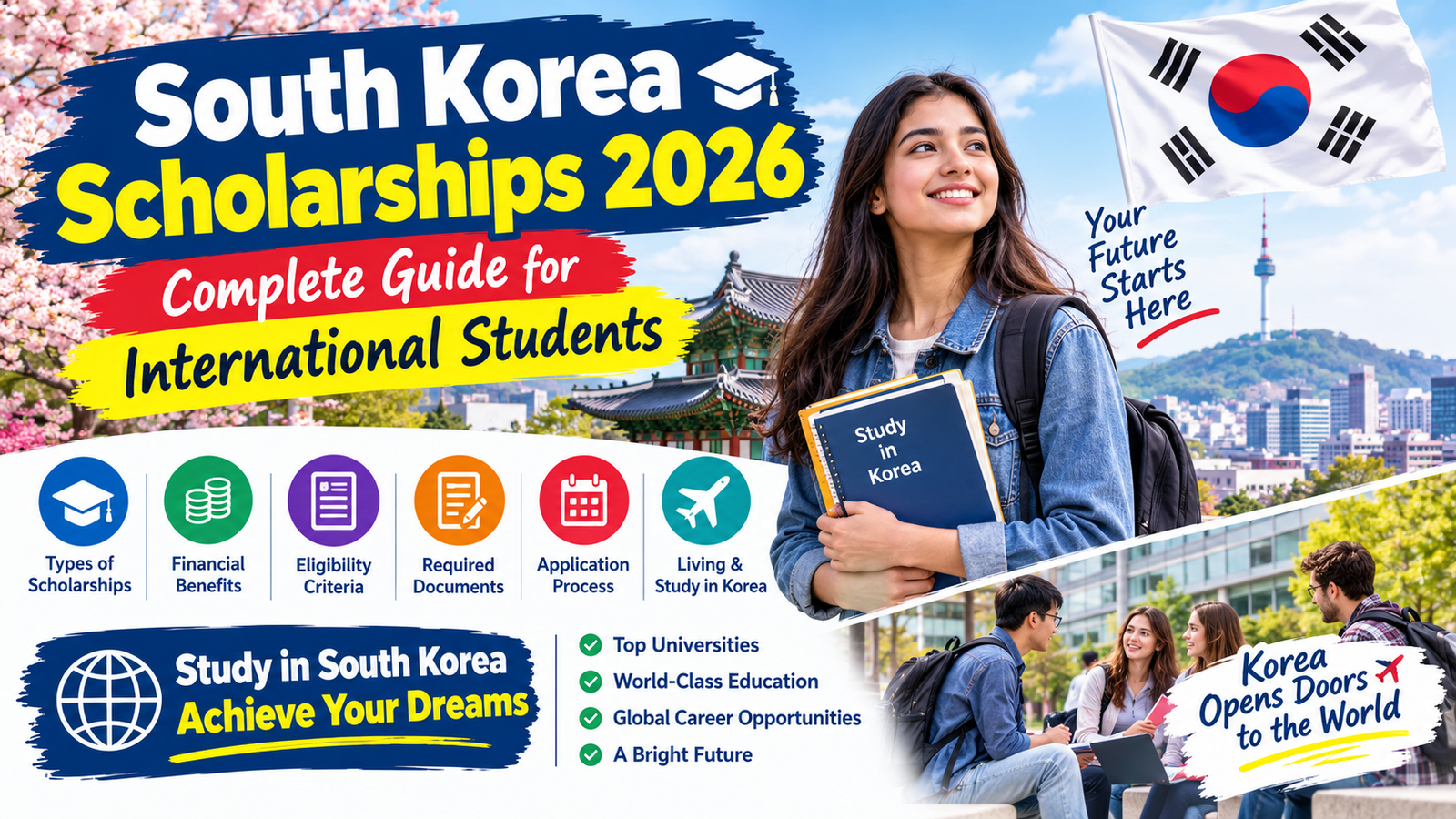
South Korea is a popular country for students who want to study abroad. Its universities teach many subjects. These include engineering and business and computer science. They also include medicine and arts.
Every year students from many countries apply for scholarships in South Korea. These scholarships can help pay for tuition and living costs. They can also help with other study costs.
If you plan to study in South Korea in 2026 you have different scholarship options. Some scholarships come from the Korean government. Others come from universities.
But getting a scholarship is not sure. You must meet the rules and finish the application the right way.
This guide talks about South Korea scholarships in 2026. You will read about scholarship types and who can apply. You will also read about documents and benefits. At the end you will see how international students can apply.
Why Students Choose South Korea for Higher Education
South Korea has become a good place for international students.
The country has universities with modern classrooms and research labs. They also have many study programmes.
Students can study subjects like engineering and information technology and business. They can also study science and social studies.
Some universities also teach in English.
This helps students who do not speak Korean well.
Living in South Korea also lets students learn about Korean culture and language.
But students should know the cost of living and the university rules before they decide.
Exploring Scholarship Opportunities in South Korea
There are different kinds of scholarships for international students.
Some pay for most study costs. Others only lower the tuition fee.
The amount of money depends on the scholarship programme.
Global Korea Scholarship
The Global Korea Scholarship is also called GKS. It is one of the main government scholarships for international students.
It helps students who want to study at Korean universities that take part in the programme.
The programme has places for bachelor’s and graduate study.
Depending on the type of scholarship, chosen students may get help with tuition. They may also get a living allowance and Korean language training. Other benefits may be included too.
The exact benefits and rules are in the official notice for each application round.
University Scholarships
Many Korean universities give scholarships to international students.
These scholarships may depend on school results or language skills. They may also depend on other rules from the university.
Some universities lower part of the tuition fee.
Others may give bigger awards to students with very good results.
Students should check the scholarship rules at the university they choose.
Research Scholarships
Some universities and research departments give money to graduate students.
These chances may be in science and engineering and technology. They may also be in other research fields.
Help may come from university scholarships or research projects. It may also come from assistant jobs.
Students should check if money is open for the programme they choose.
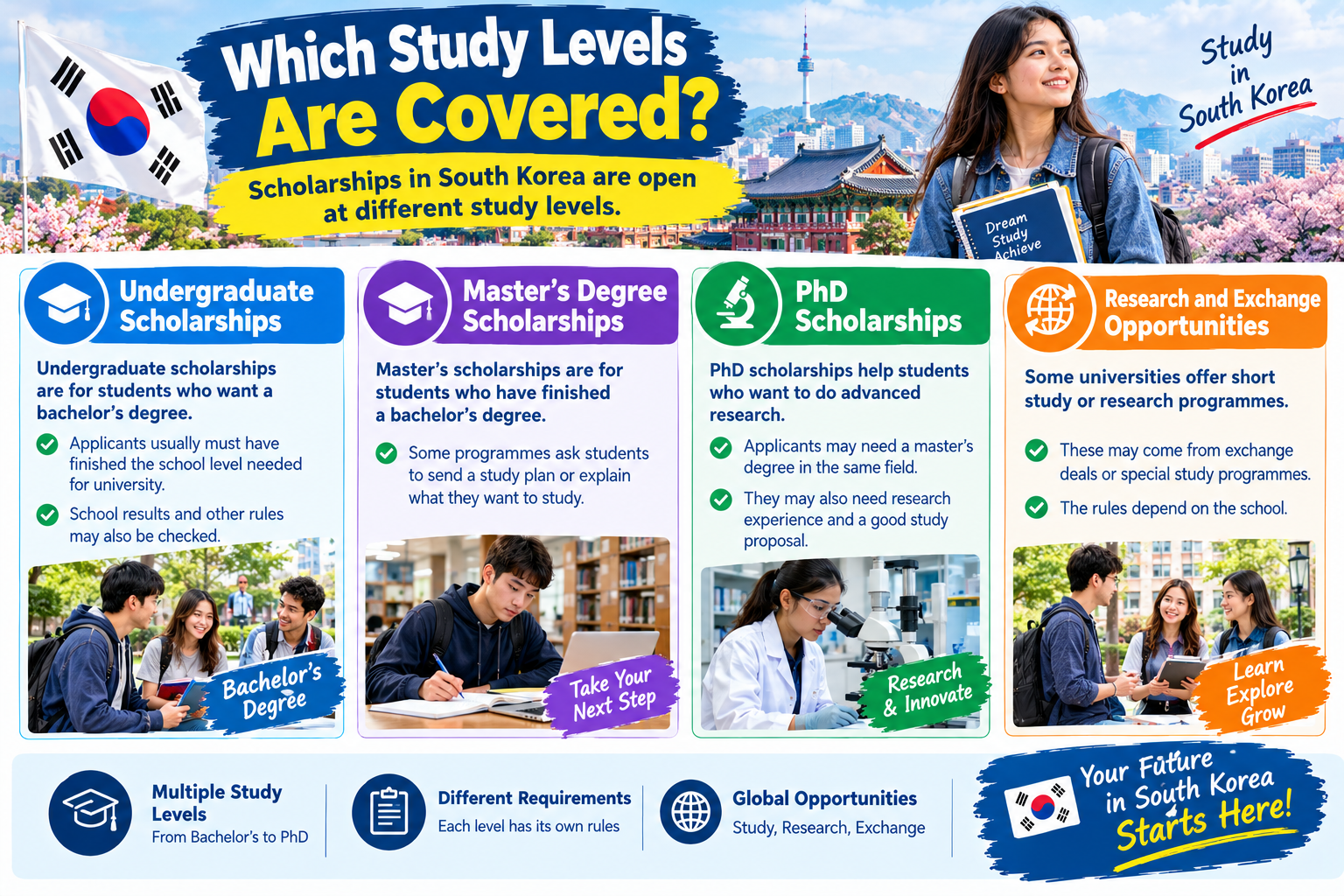
Which Study Levels Are Covered?
Scholarships in South Korea are open at different study levels.
Undergraduate Scholarships
Undergraduate scholarships are for students who want a bachelor’s degree.
Applicants usually must have finished the school level needed for university.
School results and other rules may also be checked.
Master’s Degree Scholarships
Master’s scholarships are for students who have finished a bachelor’s degree.
Some programmes ask students to send a study plan or explain what they want to study.
PhD Scholarships
PhD scholarships help students who want to do advanced research.
Applicants may need a master’s degree in the same field. They may also need research experience and a good study proposal.
Research and Exchange Opportunities
Some universities offer short study or research programmes.
These may come from exchange deals or special study programmes.
The rules depend on the school.
Who Can Apply for South Korea Scholarships in 2026?
Who can apply depends on the scholarship.
For GKS the rules may cover your nationality and education. They may also cover your age and school results. Health rules may apply too.
Applicants must also meet the rules for the degree level they choose.
Some government scholarships do not accept people with Korean citizenship. Some also do not accept people who studied in South Korea before.
University scholarships may have different rules.
Students should not think that meeting the rules for one scholarship means they can apply for all of them.
Always check the official rules before you prepare your application.
Academic Requirements for International Students
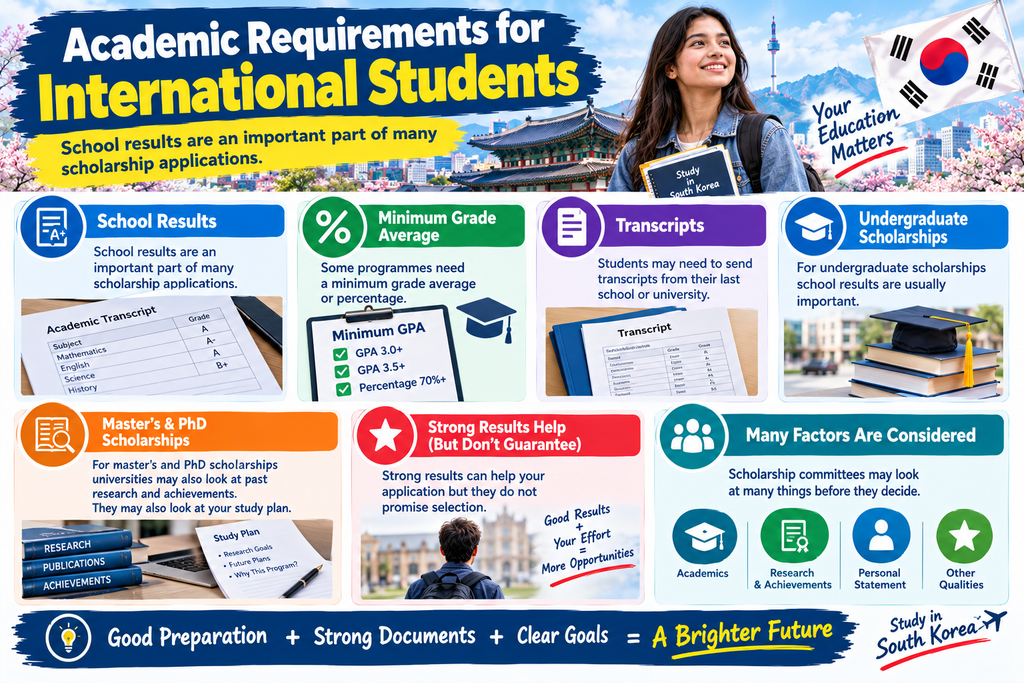
School results are an important part of many scholarship applications.
Some programmes need a minimum grade average or percentage.
Students may need to send transcripts from their last school or university.
For undergraduate scholarships school results are usually important.
For master’s and PhD scholarships universities may also look at past research and achievements. They may also look at your study plan.
Strong results can help your application but they do not promise selection.
Scholarship committees may look at many things before they decide.
Is Korean Language Knowledge Necessary?
Not every scholarship needs you to speak Korean before you apply.
Some programmes give Korean language training.
GKS may include language training for chosen students. This depends on the type of scholarship and the rules.
Some universities also teach in English.
But language rules depend on the university and the programme.
Students who apply for Korean-taught courses may need a Korean test result like TOPIK.
English-taught programmes may ask for an accepted English test.
Check the exact language rules before you apply.
Documents You May Need for a Scholarship Application
Getting your documents ready early makes the application easier.
Different scholarships ask for different documents.
Common documents may include:
- A valid passport or accepted ID.
- School transcripts.
- Graduation certificates.
- A personal statement.
- A study plan.
- Recommendation letters.
- Language test results when needed.
- Proof of nationality or family relationship.
- A research proposal for some graduate programmes.
Some documents may need official stamps or translation.
GKS applications can also have special rules for checking documents.
Students should follow the steps for their application type.
Missing or wrong documents may hurt the application.
Understanding the Global Korea Scholarship Application Routes
GKS often uses two ways to apply.
Embassy Track
In the embassy track eligible students apply through the Korean embassy in their country.
The embassy checks applications by the programme rules.
Chosen applications may then go through more rounds of review.
The process and the number of places depend on the scholarship notice.
University Track
In the university track applicants apply through a Korean university in the programme.
The university checks applications and suggests eligible students through the scholarship process.
Not every university or degree programme is open under this way.
Students should check the list of universities and the application steps.
How to Apply for South Korea Scholarships in 2026
Applying for a scholarship takes planning.
Students should understand the rules before they send their documents.
Step 1: Choose Your Study Programme
First decide what subject you want to study.
You may like computer science or engineering or business. You may also like medicine or another field.
Check which universities offer your chosen programme.
Step 2: Find a Suitable Scholarship
Look at the scholarships open for your study level.
Check if the programme pays for tuition or living costs or other costs.
Also check if your nationality is allowed.
Step 3: Read the Eligibility Rules
Every scholarship has its own rules.
Check the education rules and language rules. Also check the deadlines.
For GKS use the official notice for the right undergraduate or graduate round.
Step 4: Prepare Your Documents
Collect your school certificates and the transcripts.
Prepare your personal statement and study plan if needed.
Ask teachers or professors for recommendation letters when the needed.
Do not wait until the last days to the prepare important documents.
Step 5: Complete the Application
Follow the way to apply that the scholarship gives.
Some programmes use online systems.
Others may need you to send documents through an embassy or a university.
Make sure all details are right.
Step 6: Attend an Interview if Required
Some scholarship programmes have an interview.
You may be asked about your education and the your future plans. You may also be asked why you chose South Korea.
Prepare clear answers and explain your study goals.
Step 7: Wait for the Selection Result
Scholarship applications may go the through many review rounds.
The time needed depends on the programme.
Students should follow official notices and the not trust unofficial promises of selection.
What Expenses Can Scholarships Cover?
Scholarship benefits are different for each programme.
Some scholarships pay all tuition.
Others may only lower part of the tuition fee.
Some government scholarships may also give a living allowance and language training. They may also help with airfare or insurance.
But students should not think every scholarship pays for everything.
You may still need to plan for housing and food and transport. You may also need to plan for personal spending.
Before you accept a scholarship check exactly what it includes.
Important Things to Know Before Moving to South Korea
Studying abroad is more than getting a scholarship.
Students should learn about university life and housing and living costs.
The cost of living can be different in each city.
Housing near a university can also cost more or the less than other areas.
Students should check if their university has the dormitory rooms.
It also helps to learn about local transport and basic Korean customs.
International students must follow the immigration rules for their stay.
Part-time work may be possible for some students. But permission and limits can apply.
Students should not think a student visa lets them work freely.
Student Visa Requirements After Scholarship Selection
International students who are accepted into a degree programme usually need the right student visa.
The D-2 visa is often used for degree study in South Korea.
Some language training programmes use a different visa type.
Students may need an admission paper and a passport. They may also need money papers and other documents that Korean authorities ask for.
Scholarship winners may have different money paper rules depending on their award.
The exact rules depend on your nationality and the visa type.
Students should finish the right visa steps before they travel.
Comparing Scholarship Options in South Korea
| Scholarship Type | Study Level | Possible Financial Support |
| Global Korea Scholarship | Undergraduate and graduate | Tuition and allowances and other benefits under programme rules |
| University Merit Scholarship | Undergraduate and graduate | Full or partial tuition support |
| Graduate Research Funding | Master’s and PhD | Research or study support depending on the offer |
| University Entrance Scholarship | Mainly new students | Lower tuition or other university benefits |
| Exchange Scholarship | Exchange students | Support based on the exchange programme |
The exact benefits and rules depend on who gives the scholarship.
Frequently Asked Questions
Can international students apply for South Korea scholarships in 2026?
Yes. International students can apply for scholarships when they meet the rules. What is open depends on the university and the type of scholarship.
Is the Global Korea Scholarship fully funded?
GKS gives a lot of financial help. It can include tuition and allowances and other benefits. Students should check the official notice for the exact coverage.
Can I apply without IELTS?
Some programmes may not need IELTS. But universities and scholarships have different language rules. Applicants should check the rules for their chosen course.
Do I need to know Korean before applying?
Not always. Some programmes give Korean language training. Others have English-taught courses. The language rules depend on the scholarship and the university.
Are scholarships available for bachelor’s degrees?
Yes. There are undergraduate scholarships. These include some GKS types and university awards.
Can master’s students apply for scholarships in South Korea?
Yes. Master’s students can apply for government and university scholarships when they meet the rules.
Is accommodation included in South Korea scholarships?
Some scholarships or universities may help with housing. Others may not. Students should check the award details with care.
Can scholarship students work part-time?
Some international students may work part-time if they meet the immigration rules and get any needed permission. Work hours and other limits can apply.
Does getting a scholarship guarantee a student visa?
No. Getting a scholarship and getting a visa are two different steps. Students must meet the visa rules.
Conclusion
South Korea scholarships in 2026 can give good chances to international students who want to keep studying abroad.
Students can look at government scholarships and university awards. They can also look at research funding for different study levels.
Some scholarships give a lot of financial help. Others only help lower the tuition fee.
Before you apply choose a good programme and read the rules with care.
Get your school documents and study plan and other papers ready before the deadline.
Students should also check the official scholarship dates because the dates and rules can change.
Good planning can help you send a complete application. It can also help you make a good choice about studying in South Korea.