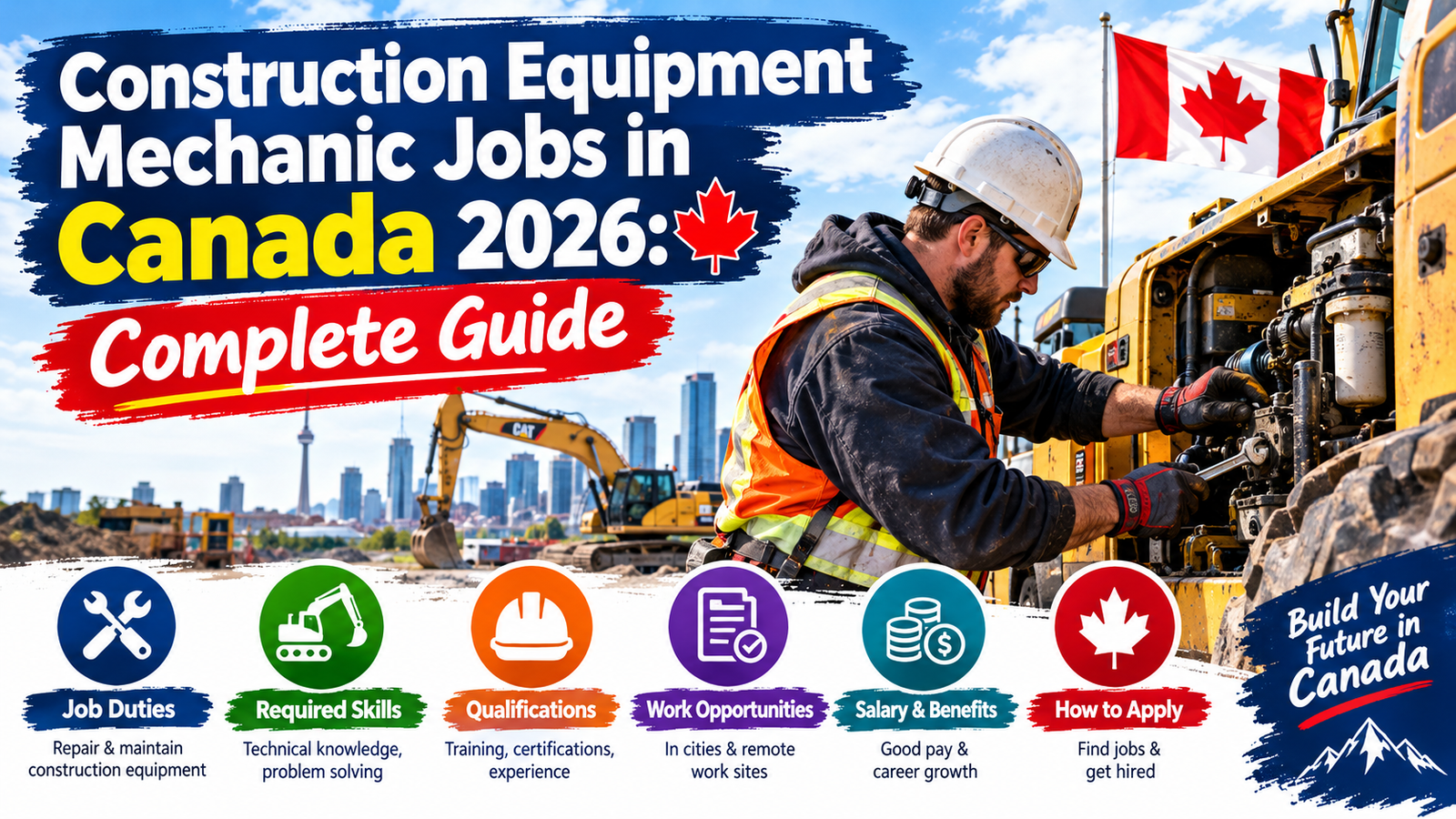
Construction equipment mechanics keep heavy machines in good shape. These machines build roads and bridges and houses. They are also used on other big projects. When a machine stops working the mechanic finds the problem and fixes it.
Canada has construction companies and mining businesses. It also has equipment rental companies and repair workshops that use heavy machines. These businesses need skilled mechanics to check and fix their equipment.
If you want work in 2026 you can look at construction equipment mechanic jobs in Canada. These jobs usually need technical skills and real work experience.
Some employers may look at skilled workers from other countries. But getting a job depends on your experience and your qualifications. It also depends on your legal right to work in Canada.
This guide talks about construction equipment mechanic jobs in Canada in 2026. You will read about job duties and skills. You will also read about qualifications and work permits. At the end you will see working conditions and how to apply.
What Are Construction Equipment Mechanic Jobs?
Construction equipment mechanics fix and look after heavy machines used on construction sites.
These machines include excavators and bulldozers and cranes. They also include loaders and graders.
Mechanics check the machines to find problems. They may fix engines and change broken parts. They also check the hydraulic systems.
Some mechanics work in repair workshops. Others travel to construction sites when a machine needs a repair.
The work needs technical knowledge because heavy machines have many mechanical and electrical parts. They also have hydraulic parts.
Mechanics must also follow safety rules when they work with big machines.
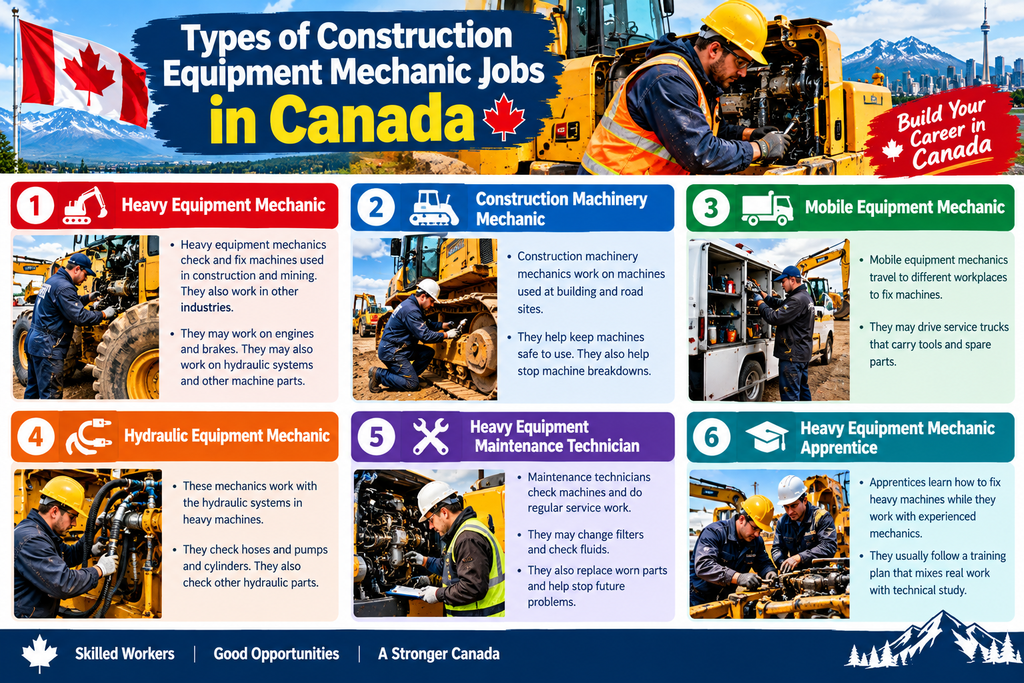
Types of Construction Equipment Mechanic Jobs in Canada
There are many kinds of jobs in this field. The work depends on the employer and the machines they fix.
Heavy Equipment Mechanic
Heavy equipment mechanics check and fix machines used in construction and mining. They also work in other industries.
They may work on engines and brakes. They may also work on hydraulic systems and other machine parts.
Construction Machinery Mechanic
Construction machinery mechanics work on machines used at building and road sites.
They help keep machines safe to use. They also help stop machine breakdowns.
Mobile Equipment Mechanic
Mobile equipment mechanics travel to different workplaces to fix machines.
They may drive service trucks that carry tools and spare parts.
Hydraulic Equipment Mechanic
These mechanics work with the hydraulic systems in heavy machines.
They check hoses and pumps and cylinders. They also check other hydraulic parts.
Heavy Equipment Maintenance Technician
Maintenance technicians check machines and do regular service work.
They may change filters and check fluids. They also replace worn parts and help stop future problems.
Heavy Equipment Mechanic Apprentice
Apprentice learn how to fix heavy machines while they work with experienced mechanics.
They usually follow a training plan that mixes real work with technical study.
Main Duties of Construction Equipment Mechanics
Daily duties depend on the company and the kind of machine.
Some mechanics fix machines for most of the day. Others do regular checks and service work.
Common duties are:
- Checking heavy construction machines.
- Finding mechanical and electrical problems.
- Fixing engines and other machine parts.
- Checking hydraulic systems.
- Replacing broken or worn parts.
- Using tools and test machines.
- Testing machines after repairs.
- Filling in maintenance records.
- Following workplace safety rules.
Mechanics must be careful when they fix machines.
A small mistake can hurt how the machine works. It can also cause safety problems.
Requirements for Construction Equipment Mechanic Jobs in Canada
The requirements depend on the employer and the province.
Many employers want people who finished high school. They also want people who have technical training in heavy equipment repair.
You usually do not need a university degree for this trade.
But trade school or apprenticeship training or real work experience is often important.
Mechanics should understand engines and hydraulic systems. They should also understand electrical parts and mechanical equipment.
They must also know how to use repair tools and test machines.
Some employers may ask for a trade certificate or proof of past work.
Check the exact requirements before you apply.
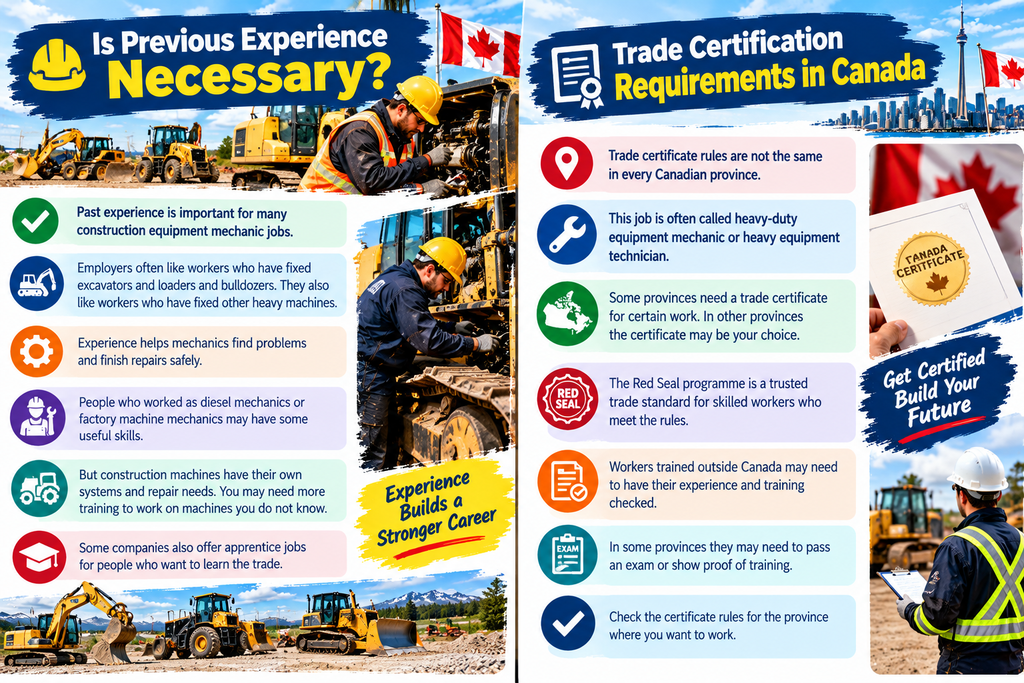
Is Previous Experience Necessary?
Past experience is important for many construction equipment mechanic jobs.
Employers often like workers who have fixed excavators and loaders and bulldozers. They also like workers who have fixed other heavy machines.
Experience helps mechanics find problems and finish repairs safely.
People who worked as diesel mechanics or factory machine mechanics may have some useful skills.
But construction machines have their own systems and repair needs.
You may need more training to work on machines you do not know.
Some companies also offer apprentice jobs for people who want to learn the trade.
Trade Certification Requirements in Canada
Trade certificate rules are not the same in every Canadian province.
This job is often called heavy-duty equipment mechanic or heavy equipment technician.
Some provinces need a trade certificate for certain work. In other provinces the certificate may be your choice.
The Red Seal programme is a trusted trade standard for skilled workers who meet the rules.
Workers trained outside Canada may need to have their experience and training checked.
In some provinces they may need to pass an exam or show proof of training.
Check the certificate rules for the province where you want to work.
Language Requirements for Mechanic Jobs
English is used in many workplaces in Canada.
French is also important in some places. This is mainly in Quebec.
Mechanics need to understand repair steps and safety notes. They also need to read technical papers.
They may also need to talk with supervisors and other workers.
Good speaking skills help when you explain machine problems.
The language you need depends on the employer and the job.
Foreign applicants may also need to meet language rules for some immigration programmes.
Can Foreign Workers Apply for Construction Equipment Mechanic Jobs in Canada?
Foreign workers can apply for construction equipment mechanic jobs in Canada when employers have jobs open.
But not every employer hires workers from outside Canada.
Some companies like people who already have legal permission to work in the country.
Other employers may look at foreign applicants who have the right training and experience.
Check if the employer takes foreign applications.
Also check if the company can finish the immigration steps.
A job offer does not mean you will get a Canadian work permit.
Work Permit Requirements for Canada
Foreign people usually need legal permission to work in Canada.
Many people who apply from outside Canada need a work permit linked to one employer.
Some employers must get a Labour Market Impact Assessment before they hire a foreign worker. This is also called an LMIA.
An LMIA helps check if hiring a foreign worker is allowed under the programme.
Some jobs may not need an LMIA.
The employer must finish the steps that are on the employer’s side.
You may need a valid passport and job papers. You may also need proof of experience and other papers.
The exact rules depend on the type of work permit and your own situation.
Do not start work before you get the right permission.
How to Apply for Construction Equipment Mechanic Jobs in Canada
To apply for construction equipment mechanic jobs first get your papers ready. Then find good employers.
Step 1: Prepare Your CV
Make a clear CV with your contact details and education. Add your technical training and work history.
Write which heavy machines you have fixed.
Add any trade certificates or training you have.
Step 2: Search for Mechanic Jobs
Look for jobs at construction companies and mining businesses. You can also look at equipment rental companies and heavy machine repair shops.
You can search with job titles like heavy equipment mechanic or construction equipment mechanic. You can also try heavy-duty equipment technician or mobile equipment mechanic.
Step 3: Check the Job Requirements
Read the job advert with care.
See if the employer wants a trade certificate or past experience or special technical skills.
Also check the place and the working hours.
Step 4: Send Your Application
Send your CV and any papers the employer asks for.
Some companies may ask for copies of training certificates or proof of past jobs.
Make sure your contact details are right.
Step 5: Attend the Interview
If the employer likes your application they may call you for the an interview.
They may ask about your work on engines and hydraulic systems and heavy machines.
Some companies may also give you a technical test.
Step 6: Review the Employment Contract
Before you say yes to a job read the contract with care.
Look at the duties and working hours. Also look at the pay and leave and other conditions.
If the employer offers a place to stay or transport then ask for the details in writing.
Step 7: Complete the Work Permit Process
If you need a work permit find out which process fits your job.
Ask the employer if an LMIA or other work approval is needed.
Follow the legal steps and wait for approval before you start work.
Working Conditions for Construction Equipment Mechanics
Construction equipment mechanics may work inside or outside.
Some work in repair shops. Others travel to construction sites or mines. Some go to places where machines are stored.
The job can mean standing and bending and lifting tools. It also means working near big machines.
Some repairs may happen in cold or wet weather.
Mechanics may also work different shifts when a machine needs a fast repair.
Understand the physical needs before you accept a job.
Important Safety Rules for Construction Equipment Mechanics
Safety is a big part of heavy equipment repair.
Mechanics work with big machines and heavy parts. They also work with electrical and hydraulic systems.
They must follow the rules before they start a repair.
Machines should be held safe and cut off from power before work begins.
Workers should wear safety shoes and gloves and eye protection.
Heavy parts must be lifted with approved equipment.
Mechanics should also report unsafe tools or the broken equipment.
Following safety rules helps stop accidents. It also the keeps machines in good shape.
Construction Equipment Mechanic Job Roles and Responsibilities
| Job Role | Main Work |
| Heavy Equipment Mechanic | Fix and look after heavy machines |
| Construction Machinery Mechanic | Service construction machines |
| Mobile Equipment Mechanic | Fix machines at different places |
| Hydraulic Equipment Mechanic | Look after and fix hydraulic systems |
| Maintenance Technician | Check machines and the do service work |
| Mechanic Apprentice | Learn machine repair with help from others |
The exact duties depend on the employer and the machines they use.
Frequently Asked Questions
Can foreigners get construction equipment mechanic jobs in Canada in 2026?
Yes. Skilled foreign workers can apply for jobs that suit them. But if you need a work permit you must follow Canada’s immigration rules.
Do construction equipment mechanic jobs require a degree?
You usually do not need a university degree. But trade training or apprentice work or trade papers may be needed.
Is previous experience required?
Many employers like experienced mechanics. Some companies also offer apprentice jobs for people who are learning the trade.
Is trade certification required in Canada?
The rules depend on the province and the kind of work. Check the rules in the province where you want to work.
Is English required for mechanic jobs?
English helps in many workplaces. French may be needed or liked in some places. Workers must understand technical and safety steps.
Do construction equipment mechanic jobs offer the LMIA support?
Some employers may apply for the an LMIA when they hire eligible foreign workers. But LMIA help is the not sure.
Do employers provide accommodation?
Some employers may help with housing. This is more common for jobs in far places. Others may not. Check the employment contract.
Conclusion
Construction equipment mechanic jobs in Canada in 2026 can be a good choice for people who have technical training and have fixed heavy machines.
The jobs include checking machines and fixing engines. They also include looking after hydraulic systems and keeping construction machines safe.
Most jobs need real skills and some may need a trade certificate.
Before you apply make a clear CV and check what the employer needs.
If you are a foreigner then also learn Canada’s work permit rules. Check if the employer can give the help you need.
Good planning can help you find the right jobs. It can also help you make better choices about working in Canada.