Electricians are needed everywhere in the Netherlands – in homes, offices, factories and building sites. They put in wires, correct electrical problems and repair electrical equipment. They also ensure that electrical systems operate safely.
Electrician Electricians install and repair electrical systems in buildings and businesses. This means electrical-skilled workers may find other job opportunities in the Netherlands.”
If you want to work in this country, you need the right skills, training and work experience. And you also need to have the legal right to work there. If you are coming from a country outside the EU/EEA you may need a work permit.
This guide covers electrician jobs in the Netherlands in 2026. It includes types of jobs, education, skills, work permits, required documents and application process.
Why choose Electrician jobs in Netherlands?
The Netherlands has a lot of houses, offices, factories and other buildings. Electricians are needed at these sites to install wiring, repair electrical issues and maintain equipment. Electricians also work with solar panels and other energy systems.
It is contingent upon the company and what type of job. Some electricians work on building sites. Others are employed in factories, offices, shops or private homes.
Employers may want workers who can install wiring, read blueprints, troubleshoot and operate testing equipment. People with experience in special electrical systems can also find work suited to their skills.
However, openings are subject to change at any time. But not all companies employ foreign workers. Not every job is a visa sponsor either.
Available Electrician Jobs Types
In the Netherlands, you can find a variety of jobs for electricians. You need to pick a job that matches your skills and work experience.
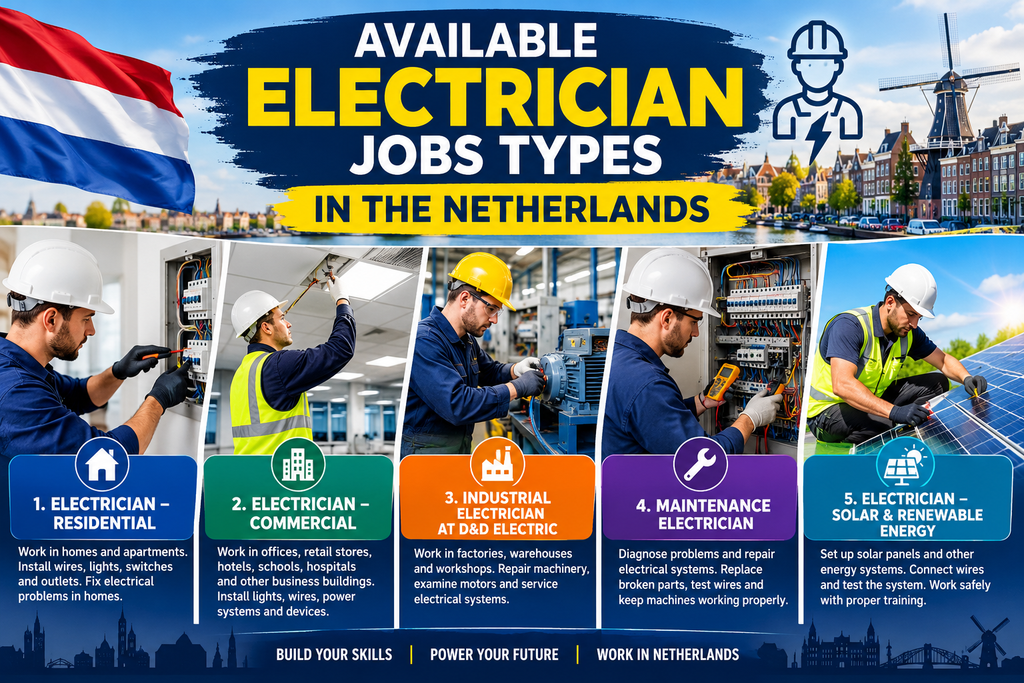
1. Electrician – Residential
Residential electricians work in homes and apartments. Install wires, lights, switches and outlets. They also locate and fix electrical problems in homes.
They must be able to read elementary electrical drawings and observe safety regulations in working.
2. Electrician – Commercial
Commercial electricians work in offices, retail stores, hotels, schools, hospitals and other business buildings. They installed lights, wires, power systems and electrical devices.
They may also collaborate with other workers to complete construction projects on schedule.
3. Industrial Electrician at D&D Electric
Factories, warehouses and workshops employ industrial electricians. They repair machinery, examine motors and service electrical systems.
They also detect problems in the machines and repair broken electrical parts. Some experience with factory equipment can be helpful when applying for these jobs.
4. Maintenance Electrician
Maintenance electricians diagnose problems and repair electrical systems. They can replace broken parts, test wires and make sure that machines are working properly.
Employers may want workers who can spot problems quickly and do regular checks.
5. Electrician – Solar & Renewable Energy
Some electricians work on solar panels and other energy systems. They set up equipment, connect wires, and make sure the system is working properly.
They may also test solar systems after they are installed. This work needs to be done safely so proper training is important.
Electrician Job Requirements in the Netherlands
It varies by company and position. Employers sometimes look for workers who have technical training and experience. Others may require special certificates or other skills.
Educational and Technical Credentials
You can take electrician jobs with a technical diploma, electrical certificate, vocational course or apprenticeship.
Employers may want proof of your education and training. If you have a certificate from another country, the employer can check whether it’s appropriate for the job.
Have your certificates and training record with you, please. You may also require translated copies if your employer requests them.
Some jobs may require special equipment or safety rules, and additional training.
Employment History
Work experience can help you get an electrician job. And many employers want workers who have installed electrical systems, repaired wires or maintained equipment.
You need to be able to explain your last job on your CV. You could tell us about house wiring, electrical panel installation, cable fitting, motor repair or electrical fault finding for example.
There may also be some entry level jobs. However, you might still need some basic electrical knowledge and safety rules.
Skills Technical
Employers want workers who can:
- Read wiring diagrams and electrical drawings.
- Install the cables, switches, sockets and lights.
- Inspect electrical systems and troubleshoot problems.
- Safely use electrical testing equipment.
- Repair equipment and change broken parts.
- Follow the safety rules and work instructions.
- Recorded work done.
Only list the skills you actually have. Your CV should be a true reflection of your training and experience.
Language Abilities
Dutch is useful for electrician jobs in the Netherlands. You may need to understand work instructions, talk to customers and talk to other workers.
Some overseas companies use English. But it is contingent upon the company and the job.
Check the language requirements in the job advertisement carefully. Always provide honest information about your language skills.
Safety Consciousness
Electrical work can be dangerous if it’s not done right. Electricians must know how to work safely and use the proper safety equipment.
Employers may ask about electrical safety, testing tools and safe working methods.
You will be able to explain how you keep yourself and other people safe when working with electricity.
Electrician positions that accept foreign nationals with visa sponsorship?
It may be possible for people from other countries to get jobs as an electrician in the Netherlands. But the rules depend on their nationality, residency status, job and length of stay.
People from the European Union (EU), European Economic Area (EEA) and Switzerland generally do not need a Dutch work permit to work in the Netherlands.
In many other countries people have to get permission before they start work. Depending on the circumstances, the employer may have to apply for a work permit (for non-EU citizens), a TWV or a combined residence and work permit (a GVVA).
In many cases the employer must follow certain rules before they can hire a person from outside the EU or the EEA. Such rules could include checking for the availability of suitable workers in the Netherlands or other European countries.
These rules mean that not just any company can hire an electrician from another country. You may have the skills a company wants, but the company may not be able to sponsor the work permit you need.
Then there is a highly skilled migrant visa. It has its own rules and a normal electrician job doesn’t automatically make the cut.
Before accepting a job, ask the employer if they hire foreign workers and if they need a work permit. You should also find out what permit you need, and whether the job meets the legal requirements.
Don’t book travel until you understand the work permit process and know the status of your application.
Documents to Prepare Prior to Application
Prepare your documents in advance and it will be easier when you apply. The documents an employer may ask for will vary.
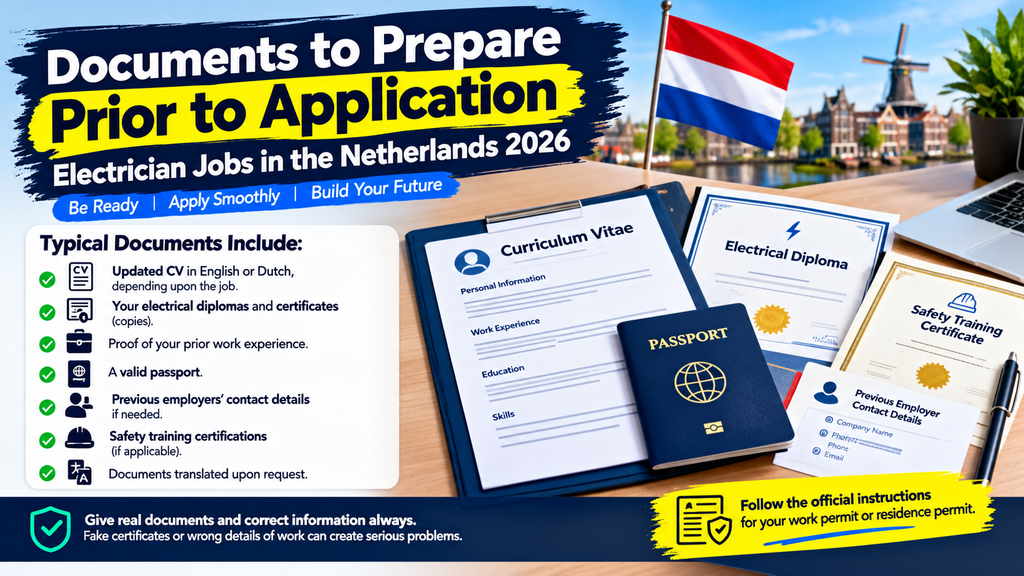
Typical documents include:
- Updated CV in English or Dutch, depending upon the job.
- Your electrical diplomas and certificates (copies).
- Proof of your prior work experience.
- A valid passport.
- Previous employers’ contact details if needed.
- Safety training certifications (if applicable).
- Documents translated upon request.
You may require additional documents for your work permit or residence permit. Follow the official instructions for your application.
Give real documents and correct information always. Fake certificates or wrong details of work can create serious problems.
How to Find Electrician Jobs
First, start looking for jobs that suit your skills and experience.
You can type in “electrician jobs Netherlands”, “industrial electrician Netherlands”, “electrical maintenance technician Netherlands”, and “electrician work permit Netherlands” into an online search engine.
You can also search for jobs in other cities and industrial areas.
Check company websites, recruitment agencies, job websites and professional networks. Read every job ad before applying for it.
Review education, experience, language, and location requirements. You should also check whether the company will take workers who need a work permit.
If you cannot find this information in the advertisement, contact the employer and ask before applying.
Beware of those promising a guarantyd job or visa. A job offer does not guarantee that you will obtain your work permit or residence permit.
Do not pay anyone that guarantees a visa. Before sending money or personal documents, check out the employer and recruitment agency.
Also read:Trailer Driver Jobs in Canada 2026: Complete Application Guide
How to Apply for Electrician Jobs in 2026
Step 1: Select the Right Job Type
Step 1: Select the type of electrician job you want. Search for residential, commercial, industrial, maintenance or solar electrician jobs.
Pick a job that fits your skills and experience. This will help you to prepare a better application and save time.
Step 2: Get Your CV Right
Make a simple and professional CV. Please include your education, electrical training, work experience, technical skills and language ability.
Tell me about your previous work in simple words. For example, talk about the electrical systems you installed or machines you repaired.
Make your CV short, clear and easy-to-read. Check that all the information is correct.
Step 3: Review the Vacancy Requirements
Read the job advertisement closely. Please review required education, work experience, language skills, location and working hours.
Make sure employer will consider foreign applicants who require work permit.
If you can’t find this information, call the company and ask before you invest too much time into the application.
Step 4: Apply
When apply follow the instructions of the company. Include your CV and any other documents the employer requests.
Use a business email address. Last but not least, check your documents before you send them.
You can also include a short cover letter. Kindly explain why you are a suitable fit for the position and if you require any support with the work permit procedure.
Step 5: Getting Ready for the Interview
Electrical repairs, wiring, testing tools and safety rules might be asked by employers. They might also ask about your past jobs .
Bring some samples of your work. Describe the problem you had, what you did and how you did the work safely.
Some employers may also ask you to do a technical test or show your practical skills.
Be truthful with yourself about what your experience has been. Don’t say that you can do work that you have never done or learned.
Step 6: Verify Employment and Permit Process
Before accepting a job, verify the company details, job duties, contract, and work permit process.
Make sure you know what permit you need and who will apply for it.
You need to check the official immigration rules for your situation. Don’t leave your current job, pay large recruitment fees or book travel based on a verbal promise alone.
What to Look for Before Accepting an Offer
Carefully read the employment contract before accepting a job. Know all the big things.
Check the designation, place of work, job description, working hours, holidays and remuneration. Check whether the company supplies tools, working clothes, training or transport.
If the company offers accommodation, ask about cost, location and conditions. Make sure these details are included in the contract.
Also ask who will process your work permit application. Learn about what could happen if your application is delayed or refused.
Remember not all electrician jobs come with accommodation, travel assistance, moving expenses or visa sponsorship. Benefits vary from company to company and by job agreement.
Common Errors to Avoid
A common mistake is applying for jobs without first verifying that the company can actually hire a foreign worker. Wasting your time.
Another pitfall is sending the same CV to all companies. Your CV should show how your skills fit the job.
Don’t claim qualifications or experience that you don’t have. Don’t ignore language requirements. Don’t sign a contract you don’t understand.
Beware of recruiters asking for money and promising a job or visa. Always check the company and the job offer before you make any payments.
Do not give away your original documents unless you have a good and valid reason to do so. Keep copies of your important papers.
Quick Overview of Electrician Jobs in The Netherlands
| Job type | Common duties | Useful background |
| Residential electrician | Home wiring, lights and repairs | Experience with the home electrical systems |
| Commercial electrician | Electrical work in offices and shops | Building installation and repair skills |
| Industrial electrician | Machine repair motors and the control systems | Factory work and machine repair experience |
| Maintenance electrician | Checking systems and finding problems | Repair and maintenance experience |
| Solar electrician | Installing and checking solar systems | Solar training and electrical skills |
What skills and qualifications are needed depends on who the employer is. This table gives a simple idea of the amount of work involved. That doesn’t mean all these jobs are available right now.
FAQs
Electrician Jobs in Netherlands 2026:
Electrician jobs can be in construction, factories, offices and solar energy projects. The number of jobs is set by the company, the location and the current demand.
Can an electrician outside of the EU work in the Netherlands?
Yes, maybe possible. But the worker must satisfy the immigration rules. The employer may also have to apply for a work permit or a combined residence and work permit. Approval not guaranteed.
Do you need Dutch for electrician jobs?
Dutch is useful in many jobs for electricians because they must read instructions and talk to other people. Some companies will take English but it is contingent upon the job.
Do I need an electric diploma?
Many employers prefer workers with an electrical diploma, technical certificate or vocational training. Some employers also prefer practical experience. Please read the requirements before applying.
Are all electrician jobs visa sponsorship?
No Some companies may employ foreign workers, others will only take people who already have the right to work in the Netherlands. Ask the employer if they provide work permit support before you accept the job.
What should you include in your electrician CV?
Your CV should contain your education, electrical certificates, work experience, technical skills, safety training and language ability. You should also describe the electrical work you have done in past jobs.
Conclusion.
Electrician jobs in the Netherlands could be a good option if the you have the right skills and experience. You can look for jobs in homes or offices or factories or the maintenance services or solar energy projects.
Start by choosing a job that fits your skills. Have a clear CV. Check the requirements before applying.
If you need a work permit, make sure that the employer is willing to do the right thing legally. Don’t trust promises of guarantyd jobs or visas.
Make sure you get a good look at each job offer and read the contract before you start making arrangements to move. Good preparation can help you to make better decisions about the electrician jobs in the Netherlands in 2026.