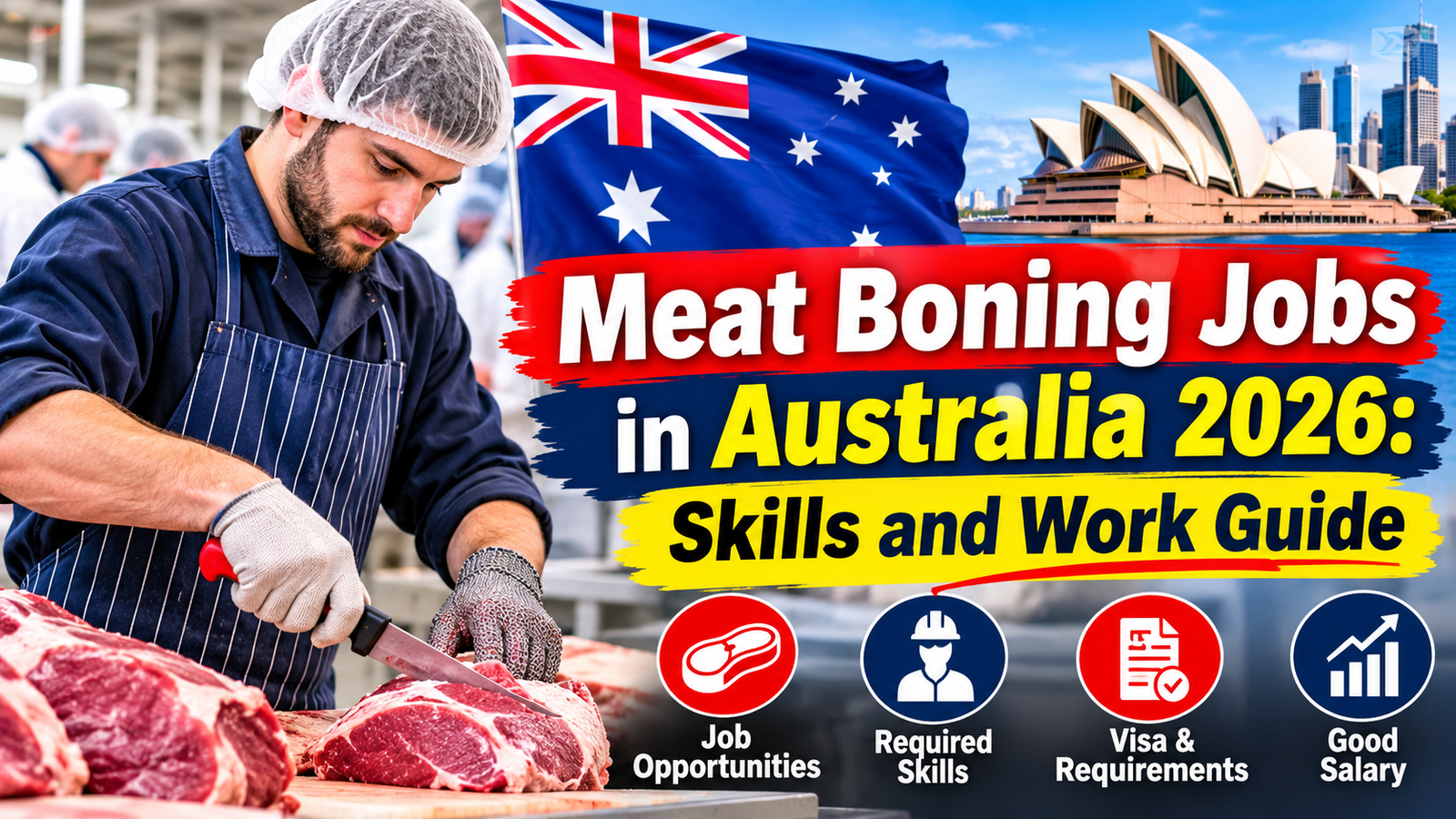
Australia has a big meat industry. Plants here get beef lamb, and other meat ready for the local shops and for buyers overseas. They need trained people to cut trim and prepare the meat.
Boning is skilled work. You use a knife to take the bones out of the meat. The cut must stay the right shape and size. That takes steady hands focus and the good food safety habits.
Have you worked in a butcher shop or the meat plant? Then this job may be worth a look in the 2026. Some employers will also take people from related work and the train them.
If you live overseas, learn the visa rules first. A job advert is the not a sponsorship offer. Many employers cannot sponsor a foreign worker at all.
This guide covers boning duties, useful skills, qualifications, working conditions, and the ways you might get the hired in the Australia.
How Meat Boning Fits into Australia’s Meat Industry
A meat plant has many stages. Once the animals are the processed under strict rules workers get the meat ready to sell in shops, to wholesalers, or to export.
Boning is one of the key stages. Workers cut the meat away from the bone and make cuts to the buyer’s specification. Depending on the plant, that could be beef, lamb, or something else.
Some plants run the big production lines. Others have small teams who handle special cuts. The workload goes up and the down with the orders.
Hygiene rules apply everywhere. Workers keep their area clean and handle the meat the right way.
Meat Boning Jobs You May Come Across
Job titles change from plant to plant. Look at the duties in the advert, not just the title.
Meat Boner
A meat boner takes bones out of meat with special knives. They follow the cutting method and try not to waste any meat.
Knowing many different cuts is a big help.
Meat Trimmer
Trimmers cut off extra fat and other parts nobody wants. They make the product match the company standard.
This job also needs a steady knife hand and a sharp eye.
Slaughter Floor Worker
Some plant workers do tasks on the slaughter floor. The duties differ between plants and the you may need special training and the safety steps.
It is a different job from boning and trimming. Read the description closely.
Meat Processing Worker
A general worker might sort, handle, and pack products. Some of this is the same task over and over on a line.
It can be a way in for people who want to learn the industry.
Skilled Butcher
Butchers cut and the prepare meat for sale. They pick cuts, portion the meat trim it and the serve customers.
Butchery helps if the you want a boning job. Still the employer may want factory-style skills too.
Meat Packing Worker
Packers weigh label wrap and the get meat ready for storage or the delivery. It is the close to meat processing, but it does not always involve a knife.

Skills Every Meat Boner Should Develop
Boning is hands-on. You must use the sharp knives safely and the know how to the separate meat from the bone without ruining the product.
The skills that matter most:
- Knife handling: Using boning knives and the other blades safely.
- Meat knowledge: Knowing the cuts of the beef lamb and other meat.
- Cutting accuracy: Taking out bones and the waste while the meat keeps its shape.
- Speed and consistency: Keeping a steady pace without dropping quality.
- Food hygiene: Cleaning up and the handling food safely.
- Physical fitness: Standing for hours and repeating the same movements.
- Teamwork: Taking instructions and working with the rest of the line.
Some employers test your skills in person when they hire. Time in a commercial meat plant counts for a lot.
Qualifications and Training Requirements
Not every entry-level meat job needs a formal qualification. Skilled boning jobs are different. They usually ask for training and proven experience.
Australia’s meat industry has recognised training standards. One of them is the Certificate III in Meat Processing.
Overseas workers may need an approved assessor to check their skills and experience. What that looks like depends on the employer’s sponsorship arrangement and the job being nominated.
Keep copies of your certificates and work records. They help prove what you can do.
Can Overseas Meat Boners Get Employer Sponsorship?
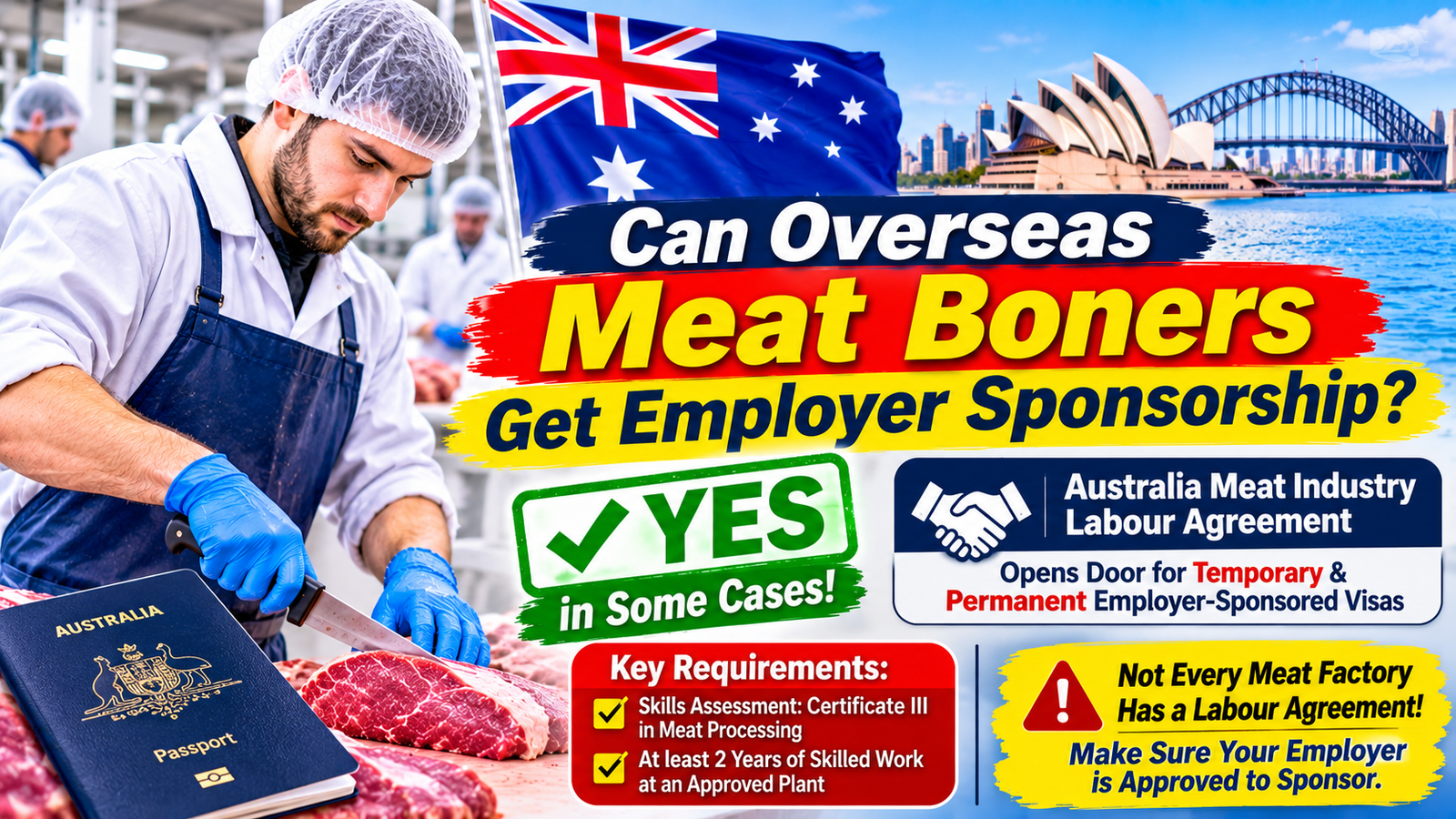
Yes, in some cases. Australia has a Meat Industry Labour Agreement. It lets approved meat businesses sponsor overseas workers as Skilled Meat Workers.
That job covers meat boning and slicing. The agreement can open the door to some temporary and permanent employer-sponsored visas, if the employer and worker both meet its conditions.
The conditions are strict. Overseas workers usually need an assessment showing skills at Certificate III in Meat Processing level. The standard pathway also asks for at least two years of skilled work at an acceptable meat processing plant.
If you apply from overseas, this is the route to understand. But not every meat factory has a labour agreement. Make sure your employer is approved to sponsor under it.
Australian Work Visa Options
Which visa fits depends on the employer, the duties, your qualifications, and the sponsorship agreement.
Skills in Demand Visa — Subclass 482
This is a temporary visa. Approved employers use it to sponsor skilled overseas workers.
Under the Meat Industry Labour Agreement, it can be used for eligible Skilled Meat Worker jobs. You must meet the rules on skills, experience, English, and other conditions.
Employer Nomination Scheme — Subclass 186
This is a permanent visa that an employer sponsors. Under the labour agreement, an eligible Skilled Meat Worker may be considered after a three-year transition period, if the other conditions are met.
It does not lead to permanent residence by itself. The employer must meet the agreement’s rules and nominate you correctly.
Skilled Employer Sponsored Regional Visa — Subclass 494
This is a provisional visa. It may be open through an eligible regional employer. The labour agreement includes it for qualifying Skilled Meat Worker jobs.
The job location and other nomination rules must fit.
Important: An ordinary meat boner advert does not always come with sponsorship. Check the employer’s agreement and the current immigration rules before you pay for an assessment or a visa application.
Where to Look for Meat Processing Work
Meat plants operate across several states and regional areas. Beef and lamb processors hire, and so do specialist meat businesses.
You can look for vacancies in:
- Queensland
- New South Wales
- Victoria
- South Australia
- Western Australia
- Tasmania
Dont assume every factory in the these places sponsors overseas workers. Read each employers hiring information and the ask about sponsorship early.
Try searching with titles like:
- Meat Boner
- Meat Boner and Slicer
- Skilled Meat Worker
- Meat Trimmer
- Beef Boner
- Lamb Boner
- Industrial Butcher
- Meat Processing Worker
Different search terms turn up jobs that are advertised under other names.
How to Prepare a Strong Application
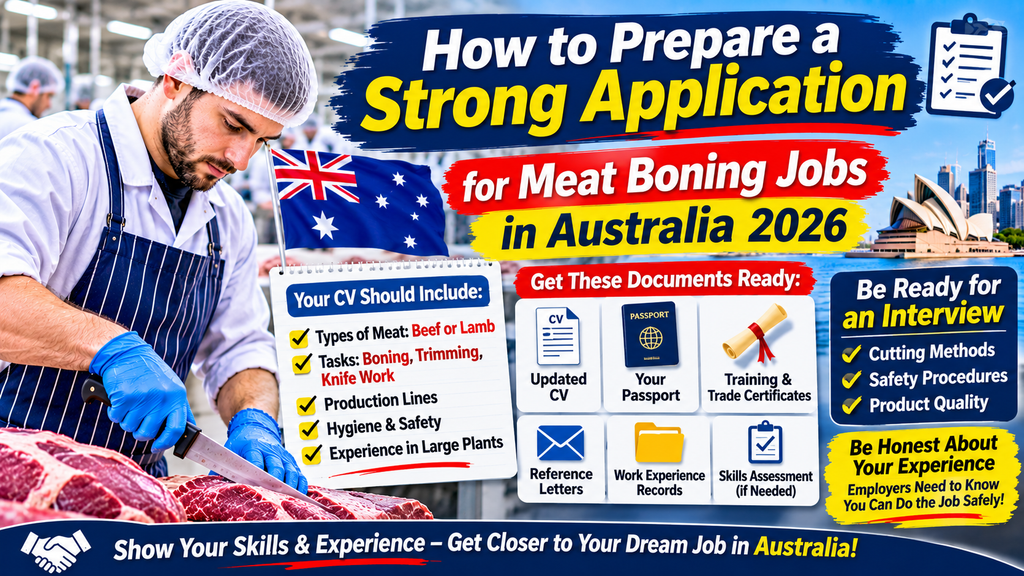
Your CV should show the meat work you have really done. Say what kind of meat you handled and what tasks you did.
For example, did you work with beef or lamb? Mention boning, trimming, knife work, production lines, and hygiene. If you worked in a large plant, describe the equipment and the setting you know.
Get these documents ready where they apply:
- An updated CV.
- Your passport.
- Training and trade certificates.
- Reference letters from past employers.
- Work experience records.
- Skills assessment papers, if needed.
A practical interview may ask about cutting methods, safety, and product quality.
Be honest about your level. Employers need to know you can do the job safely and keep doing it well.
What to Expect Inside a Meat Processing Plant
Boning is tough on the body. You may stand through most of your shift and make the same cutting moves all day.
Production areas are often cold, because meat must stay at a set temperature. You may wear gloves, an apron, a hair cover, and safety boots.
Knives and machines carry real risk. Employers give safety instructions, but you have to follow them closely.
Some plants run early morning or the night shifts. Weekend work can be the part of the schedule too.
Before you say yes to an offer, ask about shift times training safety gear the plant location and the transport.
Meat Boning Jobs: Role and Skill Comparison
| Position | Main responsibility | Useful experience |
| Meat Boner | Removing bones from meat | Commercial boning |
| Meat Slicer | Cutting meat into the set portions | Knife and cutting skills |
| Meat Trimmer | Removing fat and the unwanted tissue | Meat preparation |
| Skilled Meat Worker | Doing skilled processing duties | Meat processing training |
| Meat Packer | Packing and labelling products | Food production |
| Industrial Butcher | Preparing different meat cuts | Butchery experience |
Frequently Asked Questions
Can foreigners apply for meat boning jobs in Australia?
Yes. Overseas applicants can apply for the suitable jobs. They must meet the employer’s rules and get the right work permission.
Is meat boning considered a skilled job?
Yes, it is a recognised job in Australia’s meat industry. Skilled overseas workers may be eligible under the Meat Industry Labour Agreement if they meet its conditions.
Do Australian meat factories sponsor overseas workers?
Some do, through the Meat Industry Labour Agreement. But not every meat business has one.
How much experience is required?
It depends on the job and the sponsorship route. The standard labour agreement pathway usually asks for at least two years of skilled work at an acceptable meat plant, plus other conditions.
Do I need a Certificate III in Meat Processing?
The labour agreement needs an assessment showing skills at that level. Other jobs may have different rules.
Is IELTS required for meat boner sponsorship?
It depends on the visa and the agreement. Some concessions may apply. Check the current rules for your own case.
Can meat packing workers apply for meat boner jobs?
They can, if they have the skills or can finish suitable training. Packing experience alone does not prove you can do skilled boning.
Can this job lead to permanent residency?
For some workers, yes, through the labour agreement. They must finish the transition period and meet the other conditions.
Conclusion
Meat boning jobs in Australia in 2026 may suit workers with real experience in meat processing and the food production. The job calls for safe knife handling, accurate cutting, good knowledge of meat, and strict hygiene.
The Meat Industry Labour Agreement gives skilled overseas meat workers a possible way to get sponsored. But you must meet the experience and skills standards, and the employer must be approved under the agreement.
Get your CV and papers ready before you apply. Check whether the employer can really sponsor you, and read the visa conditions with the care. That helps you focus on genuine jobs and stay away from false offers.