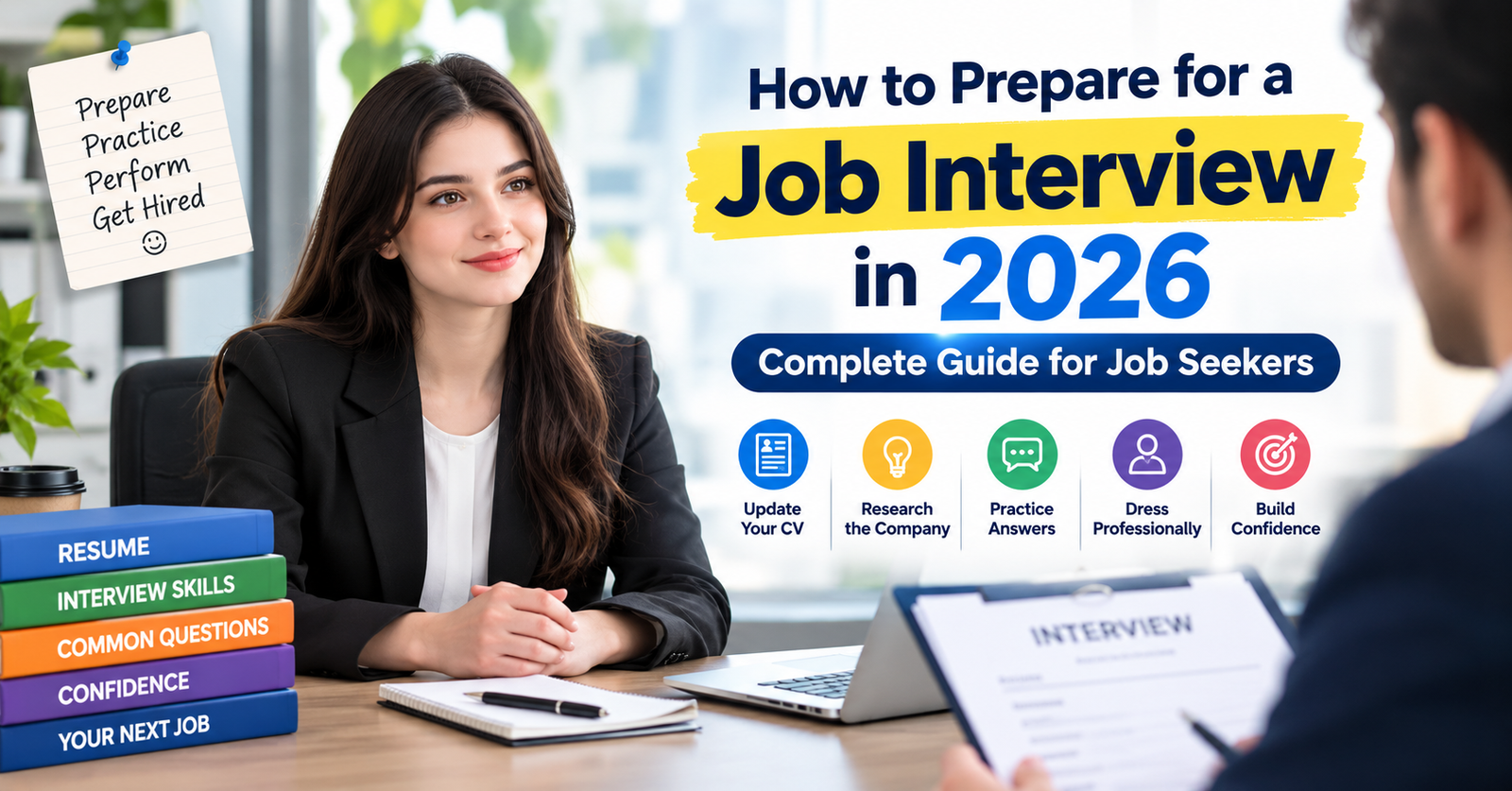
A job interview is an important part of the hiring process. Your CV can help you get an interview but the interview gives you a chance to talk about your skills experience and interest in the job.
Many people feel nervous before an interview. They may worry about difficult questions or making a mistake. Good preparation can help you feel more confident and ready.
In 2026 companies may use different types of interviews. These can include in-person interviews phone calls video interviews technical tests panel interviews and multiple interview rounds.
The interview process depends on the company and the type of job. However the basic preparation is almost the same.
You should understand the job research the company prepare for common questions and practice explaining your experience.
This guide explains how to prepare for a job interview in 2026 in a simple and practical way.
Why Is Job Interview Preparation Important?
Preparation can make an interview much easier.
When you prepare you understand what the employer wants and you can explain how your skills match the job. Preparation can also reduce nervousness because you already have an idea of what you want to say.
An interview is not only a test. It is also a conversation between you and the employer.
The employer wants to know if you are suitable for the job. You also want to know if the company and position are right for you.
That is why you should prepare questions for the employer as well.
Step 1: Read the Job Description Carefully
Start by reading the job description again before your interview.
Look at the required skills qualifications responsibilities and experience.
Pay attention to the skills that are mentioned more than once.
For example if the company wants someone with good communication skills think about a situation where you communicated successfully with customers or coworkers.
If the job requires Excel experience be ready to explain which Excel tasks or functions you have used.
If teamwork is important prepare an example that shows how you worked successfully with other people.
The job description can give you many clues about the type of questions you may be asked.
Step 2: Research the Company
Learn about the company before your interview.
Visit its official website and understand what the company does. Look at its products services and main activities.
You can also learn about the department where you may work.
For example if you are applying for a marketing job look at the company’s products customers website and social media activities.
If you are applying for a technical position learn about the company’s products technology or projects.
Company research can help you give better answers.
Instead of saying:
“I want to work here because it is a good company.”
You can explain what you like about the company and how your skills can help with the job.
Step 3: Understand Why You Want the Job
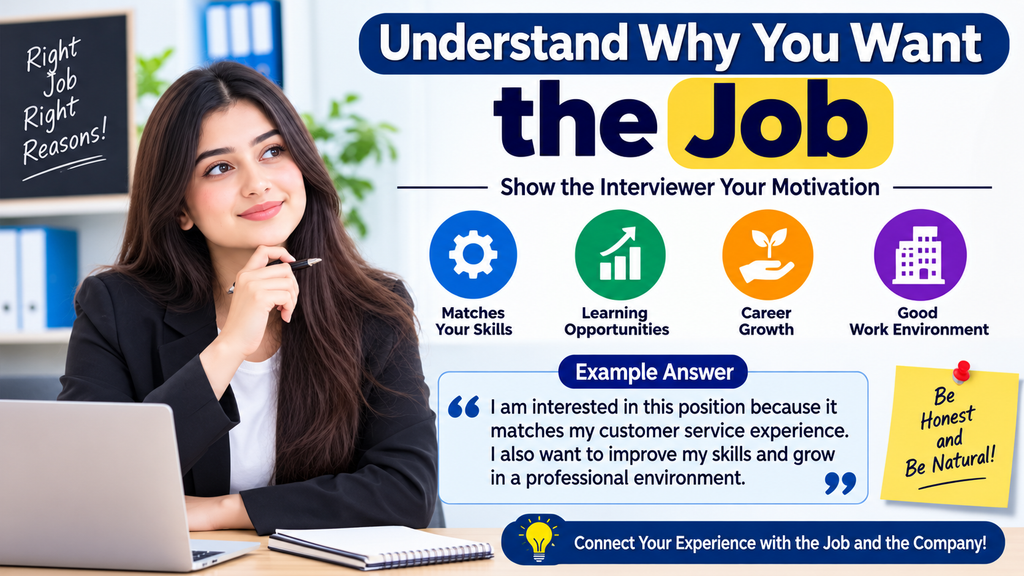
Think about why you applied for the position.
Your answer should not only be about salary.
You may like the job because it matches your skills gives you a chance to learn or offers good career growth.
The interviewer may ask:
Why do you want this job?
A simple answer should connect your experience with the job and the company.
For example:
“I am interested in this position because it matches my customer service experience. I also want to improve my skills and grow in a professional environment.”
Try to speak naturally instead of the memorizing a long answer.
Step 4: Prepare Your Introduction
One common interview question is:
Tell me about yourself.
Many candidates become nervous when they hear this question because they do not know where to start.
You do not need to tell your whole life story.
Give a short introduction about your education experience skills and career goals.
A simple structure is:
Present → Experience → Skills → Future
For example:
“I recently completed my degree in business administration. During my studies I worked on the several projects and gained experience in presentations and data analysis. I also completed an internship where I worked with customers and prepared reports. Now I am looking for a position where I can use my skills and continue learning.”
Keep your introduction related to the job.
Step 5: Prepare for Common Interview Questions
You cannot know every question the interviewer will ask but you can prepare for common questions.
Some questions include:
Tell me about yourself.
Why do you want to work here?
Why are you interested in this job?
What are your strengths?
What is your biggest weakness?
Why should we hire you?
Tell me about a difficult situation you handled.
Tell me about a time you worked in a team.
Tell me about a mistake you made and what you learned from it.
Where do you see yourself in the next few years?
Why are you leaving your current job?
What salary are you expecting?
Do you have any questions for us?
Do not memorize complete answers. Prepare the main points you want to talk about and then answer naturally.
Step 6: Learn the STAR Method
The STAR method can help you answer questions about your past experiences.
STAR means:
Situation: Explain what happened.
Task: Explain what you needed to do.
Action: Explain what you did.
Result: Explain the final result.
For example an interviewer may ask:
“Tell me about a time when you solved a difficult problem.”
You can explain the situation then describe your responsibility. After that explain the actions you took and finally tell the interviewer what happened.
This makes your answer clear and easy to follow.
Try to prepare a few real examples from your work education internship volunteer work or other experiences.
Step 7: Prepare Examples From Your Experience
Before the interview think about some situations that show your skills.
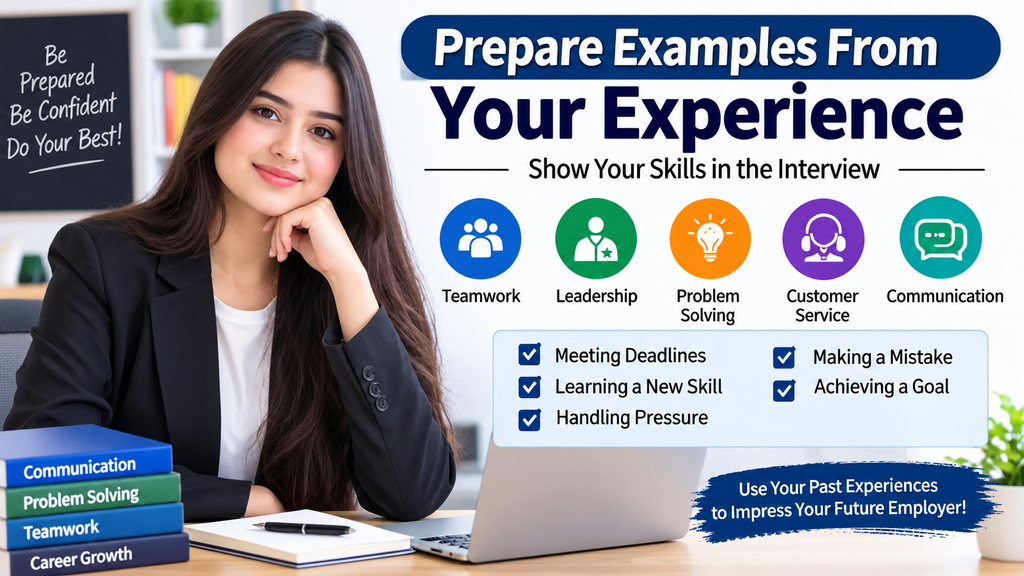
You can prepare examples about:
Teamwork
Leadership
Problem solving
Customer service
Communication
Meeting deadlines
Learning a new skill
Handling pressure
Making a mistake
Achieving a goal
You do not need a different story for every question.
A few good examples can be used for different questions.
If you are a fresh graduate do not worry if you do not have much work experience. You can use examples from university projects internships part-time jobs or volunteer work.
Step 8: Know Your Strengths
Think about three or four strengths that are useful for the job.
Avoid giving very general answers such as:
“I am hardworking.”
Instead give an example.
For example:
“One of my strengths is organization. During my internship I had several tasks to complete each day so I used a task list to manage my work and meet deadlines.”
A real example makes your answer stronger.
Choose strengths that match the job requirements.
Step 9: Prepare for Questions About Weaknesses
You may be asked:
What is your biggest weakness?
Do not say that you have no weaknesses.
Choose a real weakness that you are working to improve.
For example:
“I used to spend too much time checking small details. I am improving this by setting deadlines and focusing on the most important parts of each task.”
This shows that you understand yourself and are working to improve.
Avoid choosing a weakness that would make it difficult for you to perform the main duties of the job.
Step 10: Practice Your Answers Out Loud
Reading answers silently is not enough.
Practice speaking your answers out loud.
You can practice in front of a mirror or record yourself with your phone.
Then listen to the recording.
Ask yourself:
Am I speaking too fast?
Are my answers too long?
Am I using too many filler words?
Am I explaining my experience clearly?
Do I sound confident?
Practicing can help you feel more comfortable during the real interview.
Step 11: Do Not Memorize Every Answer
It is better to remember important points instead of complete sentences.
For example for “Tell me about yourself” you can remember:
Your education
Your experience
Your main skills
Your achievements
Your career goal
Then explain these points naturally.
This makes your answer sound more natural and helps you deal with questions that are asked in a different way.
Step 12: Prepare Questions for the Interviewer
At the end of the interview you may hear:
Do you have any questions for us?
Try not to say “No” immediately.
Prepare two or three questions before the interview.
You could ask:
“What would success look like in this position during the first six months?”
“What are the main responsibilities of this role?”
“How does the team normally work together?”
“What are the next steps in the hiring process?”
Good questions can also help you understand whether the job is right for you.
Step 13: Prepare Your Documents
Prepare all important documents before the interview.
Depending on the job you may need:
CV
Cover letter
Portfolio
Certificates
Education documents
Work samples
References
Notebook and pen
If the interview is online keep digital copies of important documents ready.
If you have a portfolio make sure you know where your files are before the interview starts.
Step 14: Choose Suitable Interview Clothes
Wear clean and professional clothes for your interview.
The right clothing depends on the company and the type of job.
For a corporate position formal clothing may be suitable.
For some creative or technical jobs smart professional clothing may be enough.
The main goal is to look clean organized and professional.
Prepare your clothes before interview day so you do not have to worry about them at the last minute.
Step 15: Prepare for an Online Interview
Video interviews are common in 2026.
Before the interview test your:
Camera
Microphone
Internet connection
Headphones
Lighting
Background
Video meeting software
Meeting link
Do a test call before the interview.
Find a quiet place where you are unlikely to be interrupted.
Keep your camera at a comfortable level and look toward the camera when speaking.
Also keep your phone on silent unless you need it for the interview.
Step 16: Prepare for a Phone Interview
Phone interviews may seem simple but they still require preparation.
Find a quiet place and keep your CV and job description nearby.
Make sure your phone has enough battery.
Speak clearly and do not rush your answers.
During a phone interview the employer cannot see your face or body language. Your voice and communication are therefore very important.
Step 17: Prepare for Technical Interviews
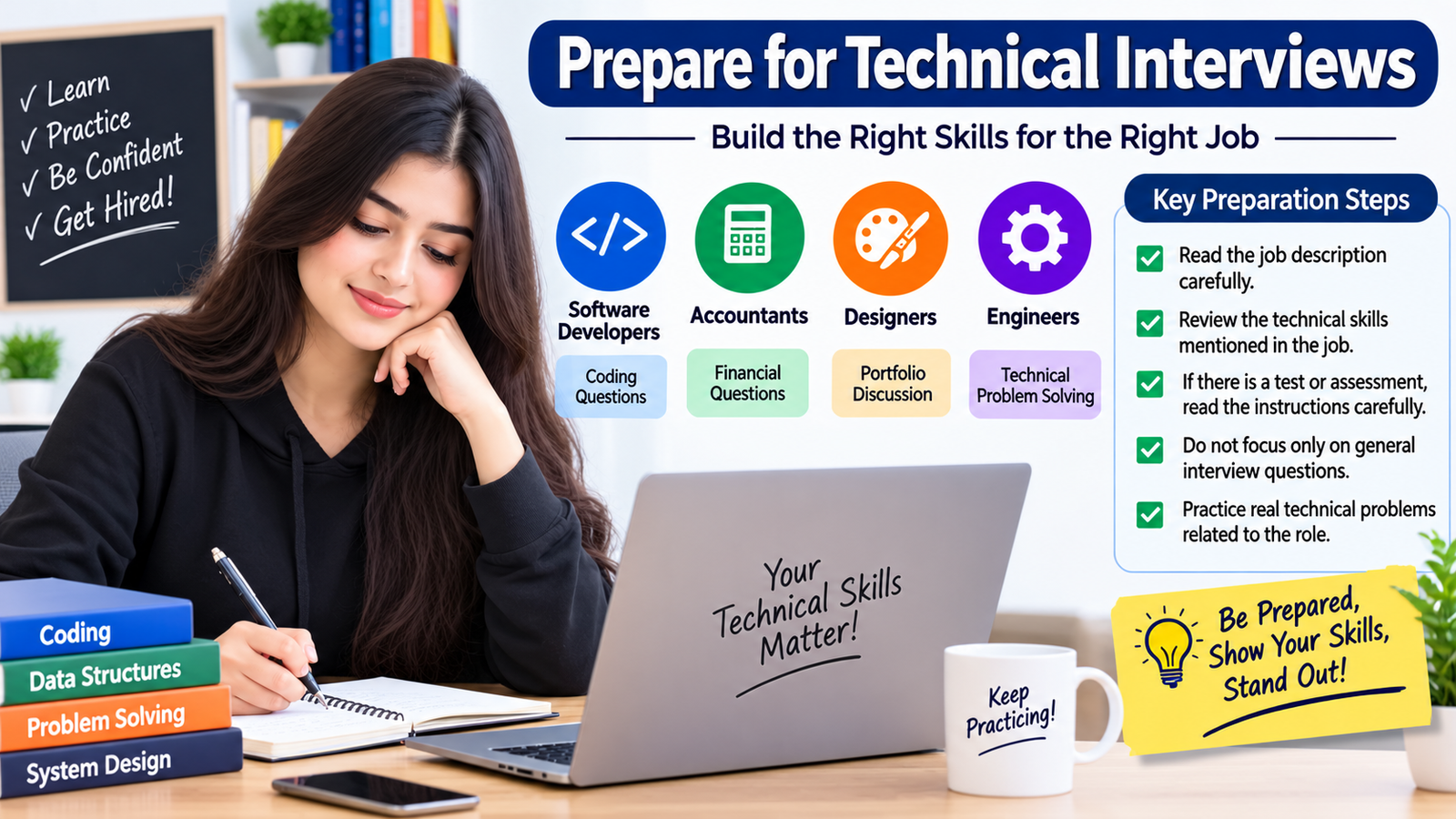
Some jobs include technical interviews or tests.
For example software developers may have coding questions. Accountants may receive financial questions. Designers may discuss their portfolio and engineers may need to solve technical problems.
Read the job description carefully and review the technical skills mentioned there.
If the company has given you information about a test or the assessment read the instructions carefully.
Do not prepare only for general interview questions if the job requires technical skills.
Step 18: Be Ready for Multiple Interview Rounds
Some companies have more than one interview before making a final decision.
You may have a short phone screening first. After that the you may speak with a hiring manager and then complete a technical or panel interview.
Different interviews may focus on the different things.
A recruiter may ask about your general experience while a hiring manager may ask about your work skills. A technical interviewer may focus on your specific knowledge.
Prepare for every stage.
Step 19: Arrive Early for an In-Person Interview
Plan your journey before interview day.
Check the:
Interview address
Travel time
Traffic
Parking
Public transportation
Building entrance
Interviewer’s name
Reception process
Try to arrive early.
Arriving early gives you some time to relax and prepare yourself.
You do not need to arrive extremely early. A reasonable amount of extra time is usually enough.
Step 20: Make a Good First Impression
Your first few minutes are important.
Greet the interviewer politely and smile naturally.
Use suitable eye contact and sit with good posture.
Listen carefully and avoid checking your phone.
Do not interrupt the interviewer.
Speak clearly and stay professional.
You do not need to pretend to be someone else. Try to be confident while staying natural.
Step 21: Listen Before You Answer
A good interview is not only about talking.
Listen carefully to the each question before answering.
If you do not understand the question you can politely ask the interviewer to explain it again.
It is also fine to take a few seconds to think.
A thoughtful answer is better than then quick answer that does not actually answer the question.
Step 22: Keep Your Answers Focused
Try not to give extremely long answers.
Answer the question directly and add an example when it is useful.
The STAR method can help you keep behavioral answers organized.
If the interviewer wants more information they can ask another question.
Your goal should be clear communication rather than talking for a long time.
Step 23: Be Honest About Your Experience
Never lie about your skills or experience.
If you have not used a specific software program you can say:
“I have not used that specific system yet but I have worked with similar software and I am comfortable learning new tools.”
Being honest is important because the company may test the skills you discussed during the interview.
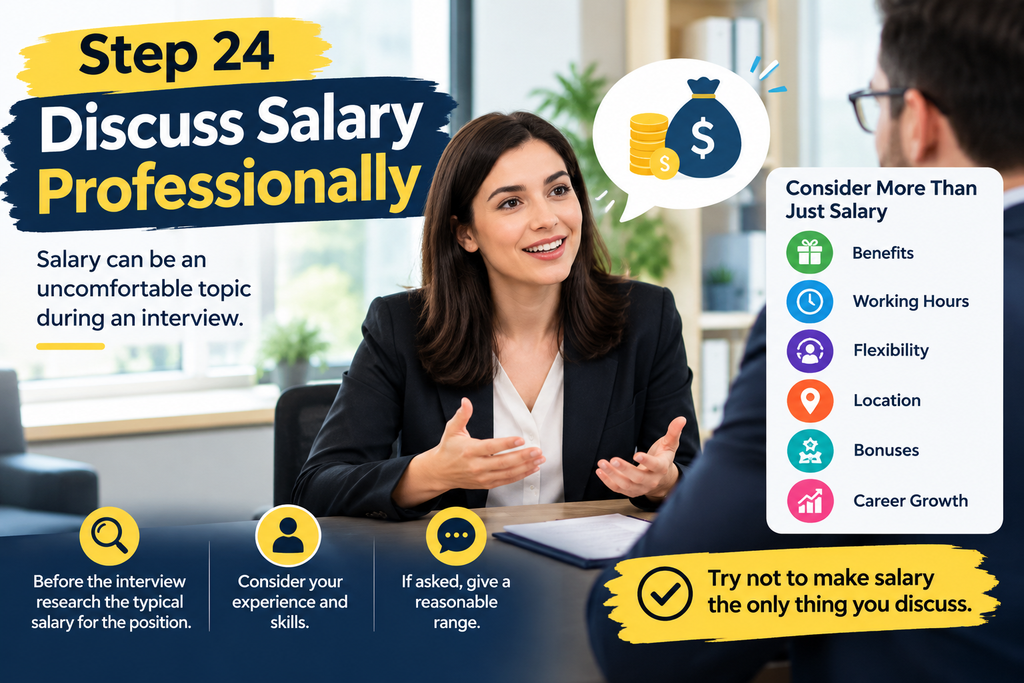
Step 24: Discuss Salary Professionally
Salary can be an uncomfortable topic during an interview.
Before the interview research the typical salary for the position and consider your experience and skills.
If the employer asks about your salary expectations you can give a reasonable range.
Also consider other parts of the job such as benefits working hours flexibility location bonuses and career growth.
Try not to make salary is the only thing you discuss.
Step 25: Show How You Can Add Value
The employer wants to know what you can bring to the company.
Try to connect your skills with the needs of the job.
For example if the company needs someone with the customer service skills explain how you have helped customers in the past.
If the company needs someone who can manage deadlines give an example of how you completed important work on time.
Specific examples can help the employer understand what you can contribute.
Step 26: Job Interview Tips for Fresh Graduates
Fresh graduates often worry because they do not have years of work experience.
You can still give strong answers.
Talk about your:
Education
University projects
Internships
Volunteer work
Part-time jobs
Technical skills
Communication skills
Teamwork
Problem solving
Learning ability
For example if you worked on a university project explain what your responsibility was and what the team achieved.
Your examples do not always have to the come from a full-time job.
Step 27: Job Interview Tips for Experienced Workers
Experienced workers should focus on their achievements and results.
Think about times when you:
Increased sales
Reduced costs
Improved a process
Managed customers
Trained employees
Completed projects
Solved technical problems
Improved efficiency
Met important deadlines
Try to explain the result when possible.
Instead of saying:
“I managed a team.”
You could say:
“I managed a team of eight employees and introduced a weekly task system that helped us track our work and the deadlines.”
Specific examples are stronger than general statements.
Step 28: Research Your Interviewer When Appropriate
If you know the interviewer’s name you can learn about their professional role.
You may find information on the companys website or the professional networking platforms.
The purpose is not to learn about their private life.
Instead you can understand their role in the company and what they may focus on during the interview.
This can help you prepare better questions and the understand the interview from their point of view.
Step 29: Think About the Interview After It Ends
Your preparation does not completely end when the interview finishes.
Think about the questions you were asked.
Were there any questions that were the difficult for you?
Were there answers that you could have explained better?
Write down the things you want to improve before your next interview.
You can also send a short professional thank-you message when appropriate.
Thank the interviewer for their time and the show that you are still interested in the position.
Avoid sending repeated messages asking for an immediate decision.
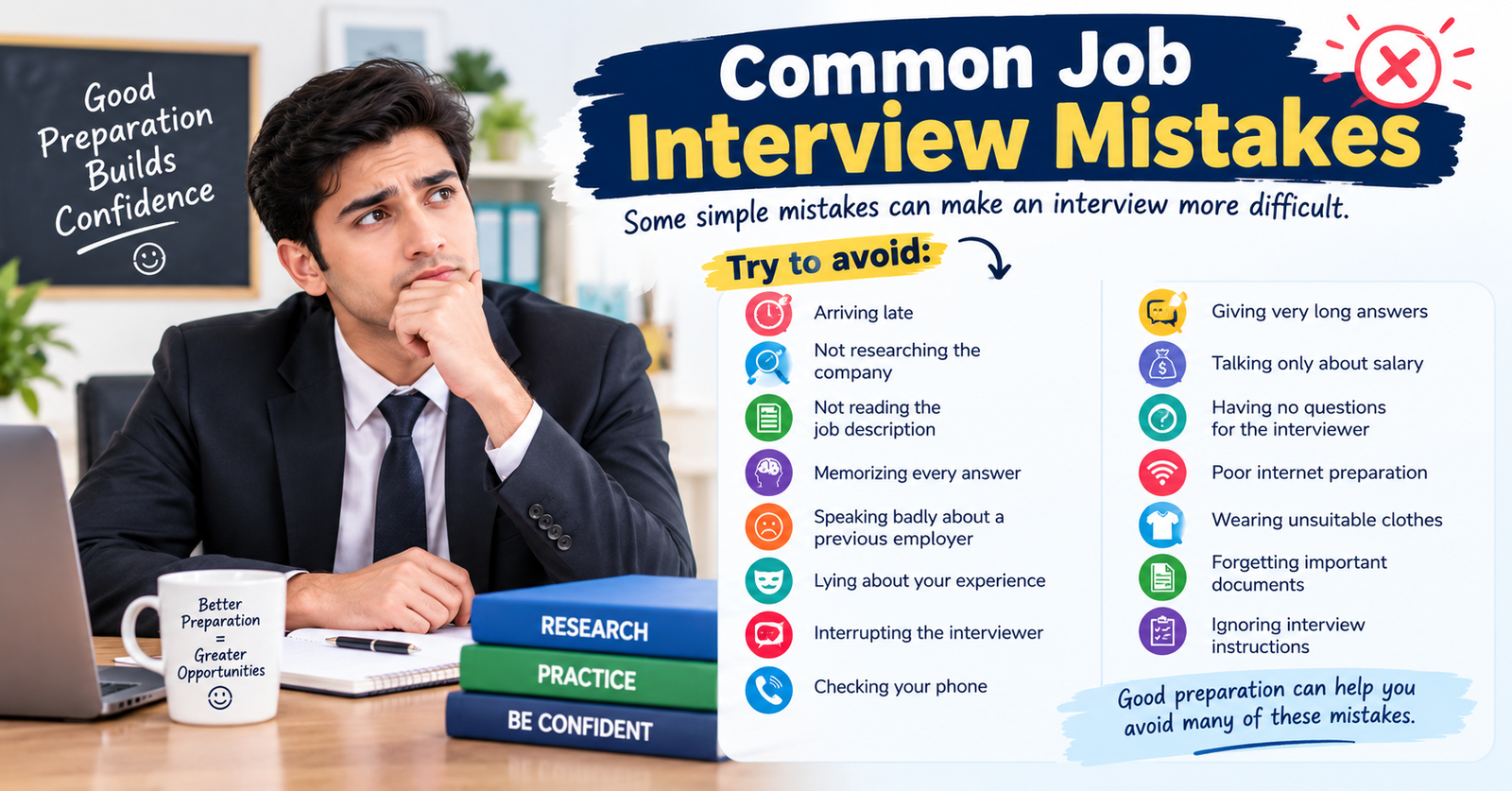
Common Job Interview Mistakes
Some simple mistakes can make an interview more difficult.
Try to avoid:
Arriving late Not researching the company Not reading the job description Memorizing every answer Speaking badly about a previous employer Lying about your experience Interrupting the interviewer Checking your phone Giving very long answers Talking only about salary Having no questions for the interviewer Poor internet preparation Wearing unsuitable clothes Forgetting important documents Ignoring interview instructions
Good preparation can help you avoid many of these mistakes.
One-Day-Before Interview Checklist
The day before your interview check everything you need.
CV: Read your CV again and the make sure you remember the details.
Job description: Review the main responsibilities and requirements.
Company research: Make sure you understand what the company does.
Examples: Prepare a few examples from your experience.
Clothing: Prepare your interview clothes.
Documents: Keep certificates and portfolio files ready.
Location: Confirm the address or online meeting link.
Technology: Test your camera microphone and internet.
Questions: Prepare two or three questions for the interviewer.
Sleep: Get enough rest before the interview.
Job Interview Day Checklist
For an in-person interview check your:
Phone Wallet Identification if required CV copies Certificates if needed Portfolio Notebook Pen Interview address Contact details Travel plan
For an online interview check your:
Internet connection Camera Microphone Headphones Meeting link Background Lighting Charger Quiet room
Simple 7-Day Job Interview Preparation Plan
If you have one week before the your interview you can follow this simple plan.
Seven Days Before
Research the company and read the job description carefully.
Six Days Before
Review your CV and identify your strongest skills and experience.
Five Days Before
Prepare for the common interview questions.
Four Days Before
Prepare a few STAR examples from your experience.
Three Days Before
Practice your answers out loud.
Two Days Before
Complete a mock interview and the work on your weak areas.
One Day Before
Prepare your clothes documents technology and travel plan.
Interview Day
Stay calm listen carefully answer honestly and the explain how your skills match the job.
Final Thoughts
Preparing for a job interview in 2026 does not mean memorizing hundreds of questions.
The best preparation starts with understanding the job and learning about the company. After that think about your skills and prepare real examples that show what you can do.
Practice is also important. Speaking your answers out loud can help you become more comfortable and improve the way you communicate.
Remember that the interview is also an opportunity for you to learn about the company. You should think about whether the job responsibilities work environment salary and career opportunities are right for you.
Whether you are a fresh graduate an the experienced worker or someone changing careers the basic preparation is similar.
Read the job description.
Research the company.
Know your CV.
Prepare examples.
Practice your answers.
Prepare questions.
Check your documents and technology.
Most importantly be honest and stay calm.
You do not need to give a perfect answer to every question. You need to show that you understand the job that your experience is relevant and that you can communicate professionally.
With good preparation you can the enter your next job interview with more confidence and a clearer idea of what you want to achieve.