Portugal has a strong food and drink making industry. Factories across the country make bottled water and soft drinks. They also make juice and beer and wine. These businesses need workers to help with daily production and packing.
Beverage production jobs may suit people with factory experience or food processing experience. Machine work experience helps too. Some employers also accept new workers for entry-level jobs where training is given.
For foreign workers finding a good job is only the first step. They must also meet the employer’s needs and get the right permission to work in Portugal.
This guide covers the different drink factory jobs and the skills needed. It also covers work conditions and the steps to apply in 2026.
Portugal’s Beverage Industry and Employment Opportunities
Portugal makes many types of drinks for local buyers and for other countries. The industry includes water bottling and soft drink making. It also includes wine making and other drink work.
Factories use production lines to mix ingredients and fill bottles. They also seal containers and label products. Then they pack the finished goods. This work needs production workers and technical staff.
The type of jobs depends on what the factory needs. Some jobs are basic packing work. Others need experience with factory machines or quality checks.
People who want to work in this field should know that not every factory job is open to foreign applicants. Employers must be willing and legally able to hire workers from outside the European Union.
Different Beverage Production Jobs in Portugal
Drink factories have several teams. Workers may be placed in production or packing. They may also work in storage or machine maintenance.
Beverage Production Worker
Production workers help prepare and make drinks. Their tasks may include handling raw materials and checking production equipment. They also support the making process.
They follow instructions from bosses and make sure the work is done safely.
Bottling Line Operator
Bottling line operators work with machines that fill bottles and containers. They may check the filling process. They report problems when a machine stops working.
Some employers give training for basic machine work. Factory experience can be a plus.
Packaging Worker
Packaging workers get finished products ready for the storage and delivery. Their tasks may include putting bottles into boxes and sealing cartons. They also the check labels.
This work may suit people with past experience in food factories or general production.
Quality Control Assistant
Quality control staff help check products while they are the made. They may look at packaging and labels. They also check the bottle condition and the other product details.
Some jobs need education or experience in food science or the lab work. Quality checking experience counts too.
Warehouse and Storage Worker
Drink factories need workers to organise raw materials and finished products. Warehouse tasks can include sorting stock and the preparing orders. They also the include moving boxes.
Forklift experience may help for jobs with industrial lifting equipment. Employers may ask for the right training or certificate.
Machine Maintenance Technician
Maintenance technicians check and repair factory equipment. They may work with conveyor belts and filling machines. They may also work with pumps and motors and packing systems.
These jobs usually need technical knowledge and past maintenance experience.
Main Duties in a Beverage Factory
The daily tasks depend on the job title and the production team. General production workers may do different tasks during a shift.
Common duties include:
- Getting materials ready for production.
- Supporting drink making work.
- Running basic production equipment.
- Filling and packing bottles.
- Checking labels and product containers.
- Removing damaged packaging.
- Keeping work areas clean.
- Following hygiene and safety instructions.
- Reporting machine problems to bosses.
- Helping with storage and moving products.
Workers must follow factory rules because drinks are made for people to consume. Clean work habits are an important part of food and drink making.
Skills and Qualifications Employers May Expect
The needs are different at each employer. Some entry-level jobs may not need a special diploma. But technical and quality control jobs usually need related education or experience.
Useful skills include:
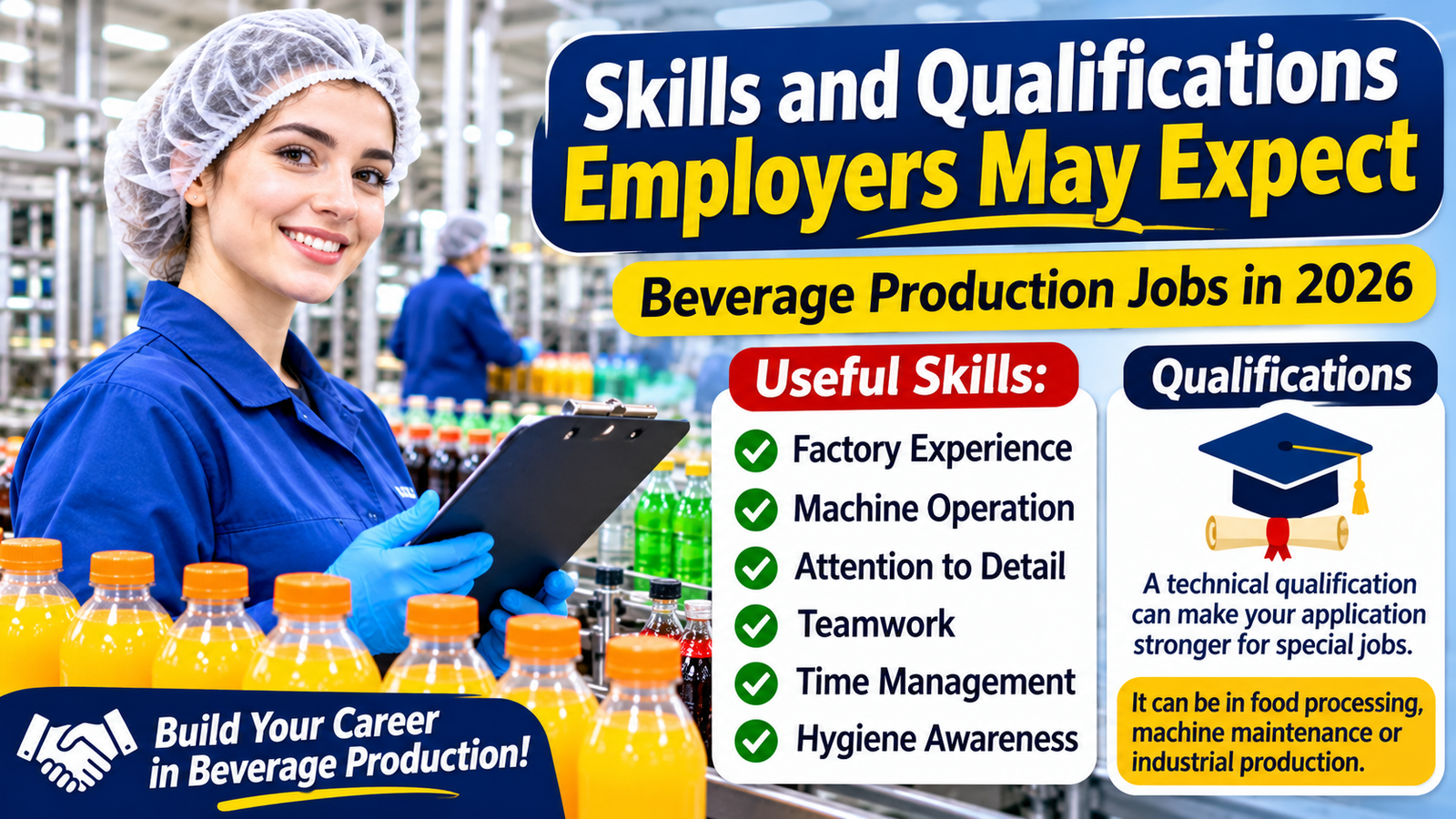
- Factory experience: Past work in food processing or packing can help you understand production routines.
- Machine operation: Knowing conveyor systems and filling equipment can help. Packing machine knowledge helps too.
- Attention to detail: Workers must check bottles and labels and packaging with care.
- Teamwork: Production lines have many workers who must plan their tasks together.
- Time management: Workers may need to finish tasks within a set production plan.
- Hygiene awareness: Workers should know basic cleanliness rules in food making places.
A technical qualification can make your application stronger for special jobs. It can be in food processing or machine maintenance. Industrial production works too.
Do You Need Portuguese Language Skills?
Portuguese is useful in most local factories. Workers may need to understand instructions from bosses and talk with other workers.
Some international businesses use English in certain teams. But don’t think every factory accepts English-speaking workers.
Basic Portuguese can help with work talk and daily life. Learning common words about production and safety may also help before you travel. Machine words are useful too.
Always check the language needs in the job ad. Technical jobs may have different needs from basic packing jobs.
Where Are Beverage Production Jobs Located?
Drink making businesses work in different regions of Portugal. Some areas have food plants and bottling sites. They also have distribution centres.
- Lisbon and surrounding areas: The region has food and drink businesses and warehouses. It also has factories. Applicants can look for production and packing jobs.
- Porto: The northern region has many factories and drink businesses. Jobs may include production and storage. Technical maintenance jobs may be open too.
- Setúbal: The region has industrial and transport work. Some businesses may hire workers for factory tasks and distribution.
- Braga: Factories work in the region. Applicants can look for production and maintenance jobs.
- Aveiro: The area has industrial and food making work. Some employers may need production and packing staff.
These places are starting points for a job search. Don’t treat them as proof that jobs are open right now.
Work Conditions in Beverage Factories
Drink production workers usually work in factories or processing sites. The work may mean standing for a long time and doing similar tasks during a shift.
Some production lines run all day. So workers may have morning or evening or night shifts. Some employers may also ask for weekend work.
The workplace may be loud because of the machines. Some areas can be cold or wet because of cleaning and processing work.
Employers usually give instructions about hygiene and work safety. Workers may also need safety clothing like gloves and hair covers. Safety shoes are needed too.
Before you accept a job check the work hours and shift plan. Check transport and housing conditions too.
Work Visa Requirements for Foreign Applicants
People who are not citizens of the European Union or the European Economic Area or Switzerland usually need permission to work in Portugal.
For long-term work one common route is a residence visa for employed work. Applicants usually need a real work contract. A promise of a work contract or another accepted employer paper can work too.
The general steps are:
- Find a real job offer from a Portuguese employer.
- Get the work contract or the accepted written job promise.
- Prepare the needed visa papers.
- Apply through the Portuguese consulate for your country of residence.
- Follow the instructions after the visa decision.
- Finish the residence permit steps after you arrive in Portugal.
The papers may include a valid passport and a criminal record certificate. They may also include proof of housing and money. Travel insurance and job papers may be needed too.
The exact needs depend on your case and the current rules. A job offer does not guarantee visa approval.
An important point for basic factory workers is that employers must be willing to hire foreign applicants and follow the legal steps. Don’t think every drink production job offers visa help.
How to Apply for Beverage Production Jobs
A simple and clear application can help employers see your experience. Follow these steps when you look for work in Portugal.
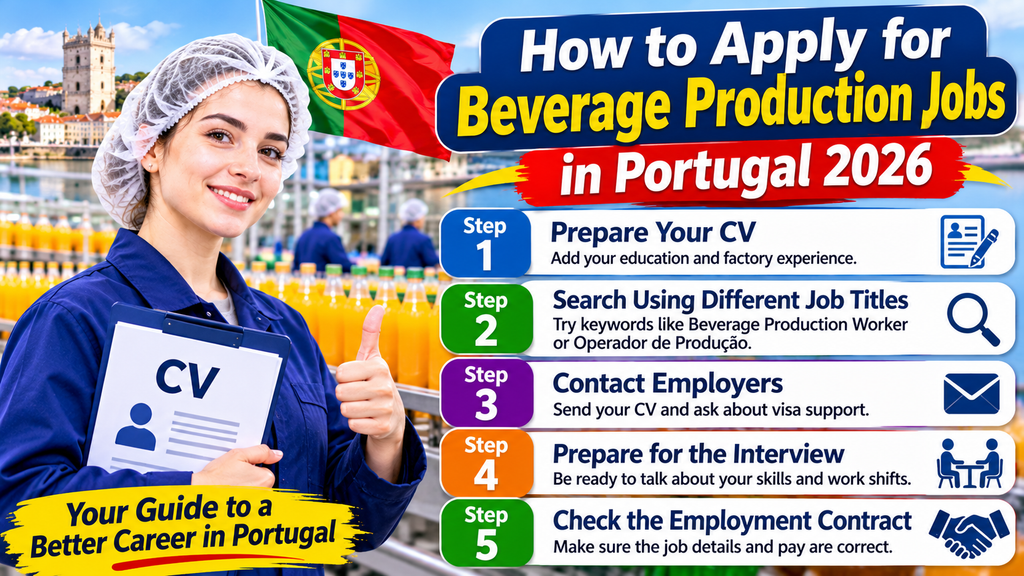
Step 1: Prepare Your CV
Make a new CV with your education and past jobs. Add your hands-on skills too.
If you worked in a food factory or a packing team or a warehouse explain your tasks. Write about any experience with production machines and hygiene steps.
Step 2: Search Using Different Job Titles
Employers may use different names for similar jobs. Search for words like:
- Beverage Production Worker
- Food Production Operative
- Bottling Line Operator
- Packaging Worker
- Factory Production Assistant
- Warehouse Operative
- Machine Operator
- Trabalhador de Produção
- Operador de Produção
- Operador de Embalamento
Using both English and Portuguese search words can help you find more good jobs.
Step 3: Contact Employers
Apply directly to companies that post suitable jobs. Send your CV and explain your experience.
If you need a work visa ask if the employer accepts applicants from outside the EU. Also ask if it can give the needed job papers.
Step 4: Prepare for the Interview
Employers may ask about your past factory work and if the you can work shifts. They may also ask if you can follow hygiene steps and the work in a production team.
Answer honestly and explain the tasks you did in the past jobs.
Step 5: Check the Employment Contract
Before you accept an offer read the contract with care. Check the job title and pay. Check the work hours and the work place too.
Make sure the employer’s details are real. Also make sure the job offer matches the papers used for your visa application.
Documents to Prepare Before Applying
Having your papers ready makes hiring easier.
| Document | Purpose |
| Valid passport | ID and visa application |
| Updated CV | Shows skills and job history |
| Education certificates | Shows related education |
| Experience letters | Proves past factory work |
| Training certificates | Shows machine or food production training |
| Employment contract | Supports the work visa application |
| Police clearance certificate | May be needed for immigration |
| Proof of accommodation | May be asked for in the visa process |
Some papers may need an official translation or legal approval. Follow the instructions from the Portuguese consulate before you send them.
How to Avoid Fake Job Offers
Foreign job seekers should be careful with overseas job offers. Some people post factory jobs that don’t exist. Others promise sure visas if you pay first.
Before you accept an offer check the company and its contact details. Ask for a written work contract. Check that the job duties and pay are clear.
Be careful if someone promises a visa without a proper application. No private agent can promise that Portuguese offices will approve your visa.
Don’t send money to personal accounts without checking the hiring process. Keep copies of your papers and payment records.
Frequently Asked Questions
Can foreigners apply for beverage production jobs in Portugal?
Yes. Foreign applicants can apply for suitable jobs. But people from outside the EU usually need the right work and residence permission before they start long-term work.
Do beverage factories hire workers without experience?
Some basic production and packing jobs may accept people with no experience. Technical and machine jobs usually need related skills or training.
Is Portuguese language compulsory?
Not for every job. Some employers may accept English-speaking workers. But Portuguese can help with work talk and safety.
Can a beverage factory provide a work visa?
An employer can give the needed job papers and take part in the legal process. But not every company hires foreign workers or helps with visa applications.
Which jobs are available in beverage factories?
Possible jobs include production worker and bottling line operator. They also include packing worker and warehouse assistant. Quality control assistant and maintenance technician jobs exist too.
Can I apply for these jobs from outside Portugal?
Yes. You can contact employers from abroad. If you are chosen you can follow the residence visa steps with the needed job papers.
Do beverage factories provide accommodation?
Some employers may offer housing or help workers find a home. It is not sure. Always confirm the details in writing before you accept a job.
Conclusion
Beverage production jobs in Portugal can offer chances for people who like factory work and food processing. Packing and machine work fit too. The industry has different jobs for entry-level workers and experienced technicians.
Applicants should prepare a clear CV and look for jobs that match their skills. Learning basic Portuguese can also make work talk easier.
Foreign workers must check the job and visa rules before they make travel plans. A real job offer and the right legal permission are key steps towards working in Portugal.