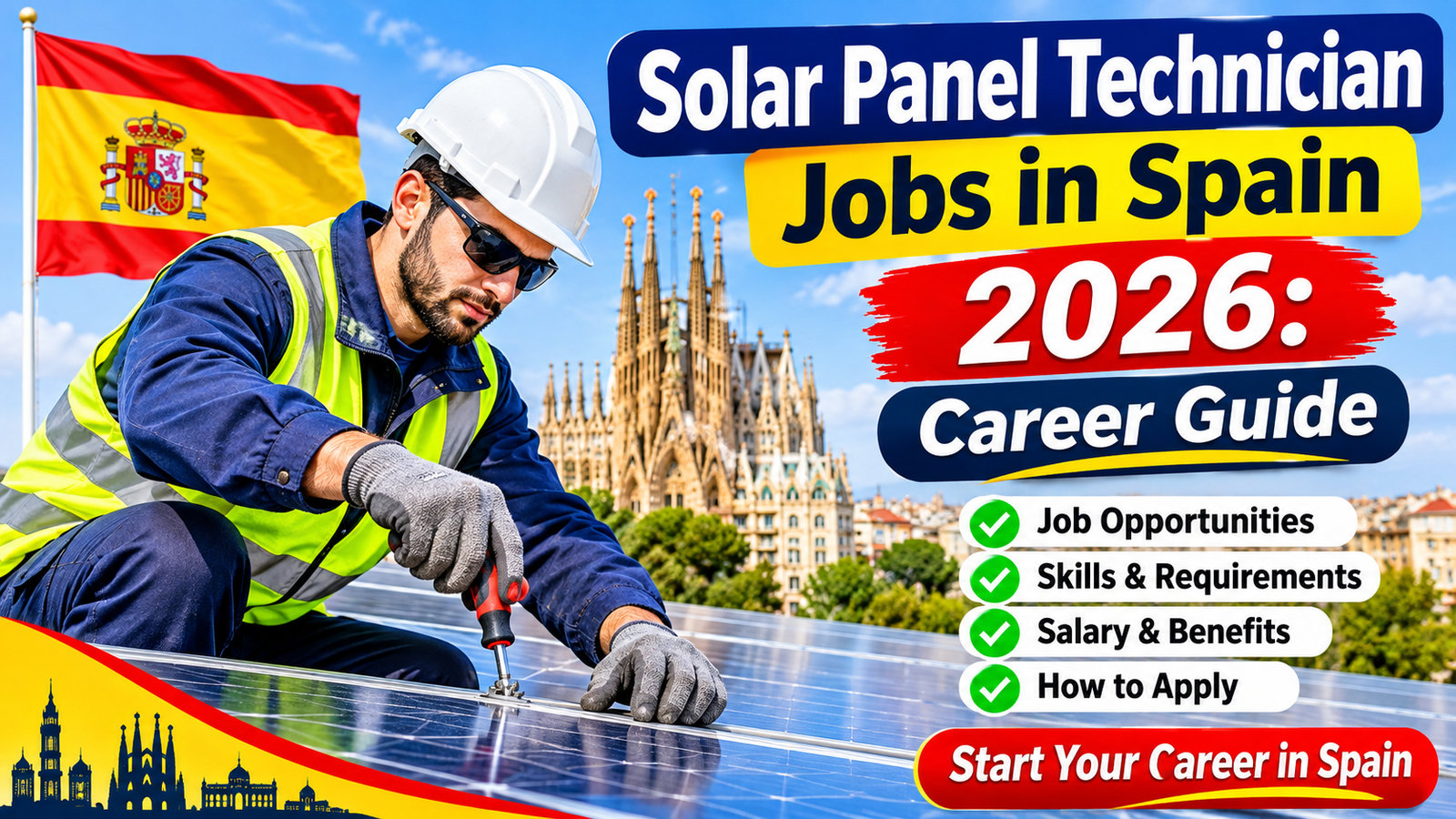
Solar energy is a big part of Spain’s green energy industry. Solar panels are put on homes and shops. They are also put on factories and large solar farms. These systems need trained workers to set up the equipment and connect the wires. They also need workers to keep the panels in good shape.
Solar panel technicians help build and look after these systems. Their work may include fixing panel supports and putting up solar panels. They may also connect cables and check inverters. They find technical problems too.
If you have worked in electrical or building jobs these roles may suit you in 2026. Green energy experience helps as well. Some employers may accept workers with hands-on experience. Technical jobs can need proper training.
Foreign applicants can look for jobs too. But people who don’t already have the right to work in Spain usually need work permission from an employer. They also need the right visa or residence permit.
This guide covers the roles and skills. It also covers training and work life. At the end you’ll learn how to apply.
Spain’s Solar Energy Industry and Employment
Spain has many places that suit solar power projects. Solar systems can be found on house roofs and shops. They are also on factory sites and large open land.
Solar companies need workers for each stage of a project. Some workers get the site ready and build the panel frames. Others do the wiring and testing. Others do the maintenance.
The work is not only about putting up panels. Solar systems also need regular checks. Workers look for damaged cables and faulty inverters. They also look for loose connections and other problems.
Companies may hire technicians for new projects. They may also hire for solar systems that already exist. Job numbers depend on how busy the projects are. They also the depend on the place and what the employer needs.
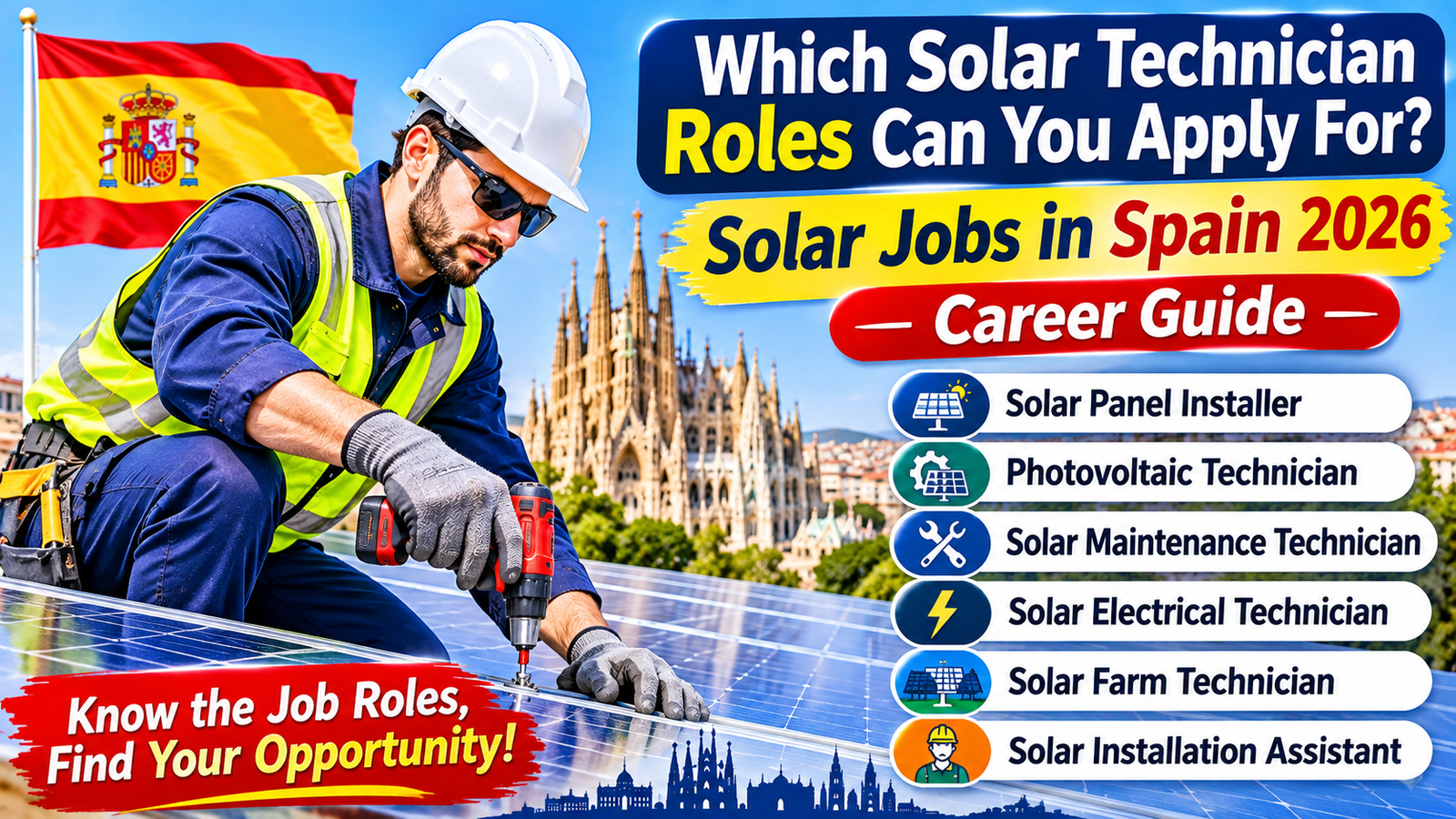
Which Solar Technician Roles Can You Apply For?
Solar employers use different job titles. The duties and the needs can be different. Read the full job description before you the apply.
Solar Panel Installer
Solar panel installers put solar panels on the roofs or on frames on the ground. They may get the frames ready and place the panels. Then they fix everything in the place.
This job can mean working outside and at heights.
Photovoltaic Technician
Photovoltaic technicians work with solar energy systems. Their duties may include setting up and the testing. They may also the fix faults and do maintenance.
They may work on the home systems or on the bigger shop and factory projects.
Solar Maintenance Technician
Maintenance technicians check solar systems that the are already built. They check how the equipment works and the find faults. They help the keep the systems running well.
Electrical and technical knowledge helps in this job.
Solar Electrical Technician
These technicians work on the electrical side of the solar systems. Their tasks may include cable connections and safety equipment. They may also work with inverters and do electrical tests.
Some duties may need special electrical qualifications or the approval.
Solar Farm Technician
Solar farm technicians help the look after large solar power systems on the ground. They may check panels and the watch the equipment. They also report technical problems.
The work can be in remote places.
Solar Installation Assistant
Installation assistants help the experienced technicians. They may carry tools and get materials ready. They may also build frames and help with simple installation tasks.
Some employers give hands-on training to the right people.
Daily Duties of the a Solar Panel Technician
The work depends on the project and your level of responsibility.
Common duties may the include:
- Getting the work area ready and the checking materials.
- Building the frames that the hold the panels.
- Putting up solar panels and the fixing them well.
- Connecting cables and electrical parts if you are qualified.
- Setting up inverter connections or helping with them.
- Checking equipment with the right test tools.
- Checking panels and electrical connections.
- Finding faults and reporting technical problems.
- Following the plans and safety rules.
- Writing down finished work and maintenance checks.
Technicians must follow the maker’s instructions and the electrical safety rules. Only qualified and approved workers should do electrical connections.
Skills Employers May Look For
Solar panel work needs hands-on skill and close attention. Employers may want the people who know basic electrical systems and can use tools safely.
- Electrical knowledge: Knowing about the cables and circuits and connections. You should also know basic electrical safety.
- Panel installation: Knowing how solar panels and the frames are fitted.
- Tool handling: Using drills and the spanners and measuring tools correctly. This includes electrical test tools.
- Problem solving: Finding faults in the setup and the helping fix technical problems.
- Technical reading: Understanding plans and equipment manuals. You should also the read simple wiring diagrams.
- Physical fitness: Working outside and standing for a long time. You also a need to carry equipment.
- Teamwork: Working well with an electricians and engineers. You also work with bosses and other installers.
Past work in electrical setup or roofing can help for some entry-level jobs. Building work and factory maintenance can help too.
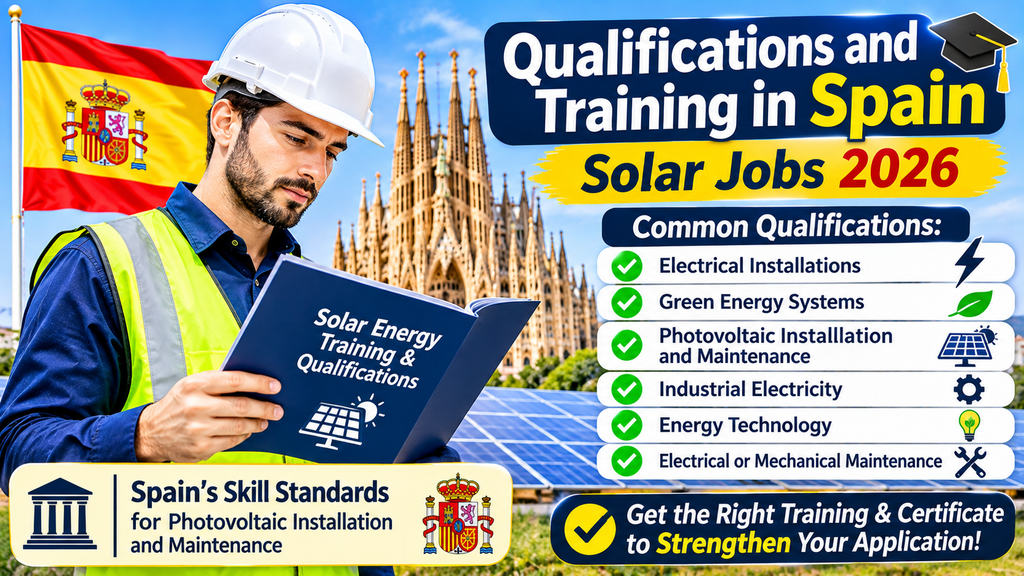
Qualifications and Training in Spain
Not every solar job needs the same qualification. An assistant may have different needs from a technician who does electrical testing or system start-up.
Employers may like people with training in:
- Electrical installations.
- Green energy systems.
- Photovoltaic installation and maintenance.
- Industrial electricity.
- Energy technology.
- Electrical or mechanical maintenance.
Spain also has national skill standards for photovoltaic installation and maintenance. The official list has separate standards for building and maintaining solar systems. These cover tasks like fitting panels and inverters. They also cover support frames and electrical equipment.
A good vocational course or an official professional certificate can make your application stronger. Certificates from other countries may need to be checked or recognised. It depends on the job and the type of work.
Ask the employer which qualification is needed. Don’t think every solar job needs the same licence.
Is Spanish Language Required?
Spanish can be important on work sites. Technicians need to understand safety rules and talk with bosses. They also need to follow technical steps.
Some international companies may use English for some technical jobs. But many local employers expect workers to speak Spanish.
Learning basic work Spanish can help you get hired. It also helps in daily tasks.
Useful job search words include:
| English term | Spanish term |
| Solar panel installer | Instalador de placas solares |
| Photovoltaic technician | Técnico fotovoltaico |
| Solar maintenance technician | Técnico de mantenimiento solar |
| Solar farm technician | Técnico de planta solar |
| Installation assistant | Ayudante de instalación |
| Renewable energy technician | Técnico de energías renovables |
Where to Look for Solar Technician Jobs
Solar setup and maintenance companies work in many parts of Spain. Jobs may be found in areas with home and shop projects. They may also be in areas with factory or large solar projects.
You can look for jobs in:
- Andalusia: This region has a lot of solar energy work and large projects.
- Castile-La Mancha: Solar farms and green energy projects create a need for setup and maintenance workers.
- Extremadura: The region has large solar power sites and related technical work.
- Aragon: Green energy projects give chances to technical and maintenance workers.
- Madrid: Solar companies and contractors may hire technicians for shop and home setups.
These are areas to look at and not a list of sure jobs. Always check the latest ads and the real work place.
Can Foreign Workers Get a Job in Spain?
Yes. Foreign applicants can apply for suitable solar technician jobs. But the immigration rules depend on your country and your current stay status.
Citizens of the EU and EEA usually have the right to work in Spain.
Applicants from outside the EU and EEA normally need work and residence permission before they start a job.
For the usual worker route the employer usually applies for the first work and residence permission. Spain may look at its own job market. A job market test or an exception can change the result.
A job offer alone does not guarantee approval. The employer and the applicant must both meet the rules.
Understanding the Spanish Work Permit Process
For many non-EU applicants the steps are like this:
- Find a real job with an employer in Spain.
- Finish the interview and get a written job offer.
- The employer checks if the the job can be used for work permission.
- The employer sends the needed application to the Spanish immigration office.
- After approval the applicant follows the visa steps through the Spanish consulate.
- Finish any needed papers and a other steps.
- Travel to Spain after the visa is a given.
- Finish the residence steps after you arrive if needed.
The exact steps depend on your case and the type of permission. Check the latest official steps before you send an application.
Don’t travel on a tourist visa and the expect to start a paid job. You need the right legal permission to work.
How to Prepare Your CV
Your CV should explain your hands-on skills and the past work clearly.
Add your technical education and job history. Add any training that fits. If you worked with electrical systems or roof setups you should explain your tasks. The same goes for thr building equipment or solar panels.
Write about the your experience with:
- Solar panel installation.
- Frames and support systems.
- Electrical wiring and connections.
- Inverters and control equipment.
- Test and maintenance tools.
- Finding and fixing faults.
- Workplace safety steps.
If you have no solar experience add related electrical or building work. Be honest about your skill level.
Get copies of your passport and education certificates ready. Add your training records and job references. Some papers may need translation.
Working Conditions and Safety
Solar technicians may work on roofs and open land. They may also work in factory buildings and large solar farms.
The job can mean climbing ladders and carrying equipment. You may stand for a long time and work outside in hot weather. Some projects may need travel between sites.
Working at heights is a big safety risk. Workers must use the right safety gear and follow site rules.
Electrical systems are risky too. Solar panels can make electricity in sunlight. So workers must follow the right steps to switch off and test.
Employers should give safety instructions and equipment. Ask about training and safety clothing before you accept an offer. Ask about transport and work times too.
Solar Technician Jobs: Quick Comparison
| Job title | Main duties | Helpful background |
| Solar Panel Installer | Fitting panels and frames | Building or installation |
| Photovoltaic Technician | Setup and system testing | Green energy training |
| Solar Maintenance Technician | Checking and fixing systems | Electrical maintenance |
| Solar Electrical Technician | Electrical connections and testing | Electrical qualification |
| Solar Farm Technician | Looking after large solar systems | Factory or solar experience |
| Installation Assistant | Helping the setup teams | Basic technical skills |
Frequently Asked Questions
Are solar panel technician jobs available in Spain in 2026?
Solar companies hire workers for setup and maintenance and technical help when projects open up. Current jobs depend on the employer and the place.
Can foreigners apply for solar technician jobs in Spain?
Yes. Foreign applicants can apply. But people from outside the EU and EEA usually need work permission and a visa before they start.
Do I need experience to become a solar panel installer?
Some assistant jobs may accept people with little experience. Technical jobs with electrical connections and testing usually need training or hands-on experience.
Is Spanish language necessary?
Spanish helps with talking at work and understanding safety rules. Some international employers may accept English speakers. It depends on the job.
Do I need an electrical qualification?
Not every solar job has the same needs. But electrical work may need special qualifications or approval under Spanish rules.
Can construction workers apply for solar installation jobs?
Yes. Building and roofing experience can help with fitting panels and getting work areas ready. Electrical tasks need the right technical skills and approval.
Does a Spanish employer provide visa sponsorship?
An employer may apply for work permission for an eligible foreign worker. Approval depends on the job and the employer. It also depends on the immigration rules.
Can solar technician work lead to long-term employment?
Some employers give long contracts. Others hire for single projects. Check the contract type and length before you accept a job.
Conclusion
Solar panel technician jobs in Spain in 2026 may suit people with electrical or building experience. Installation and green energy experience help too. The work includes fitting solar panels and looking after equipment. It also includes checking electrical systems and helping with large solar projects.
A technical qualification and hands-on experience can improve your chances. Spanish language skills can also help with talking and safety at work.
If you are applying from outside the EU check if the employer can hire from other countries. Learn the work permission steps before you make travel plans. Get your CV ready with care. Apply only for real jobs that match your skills.