Most students are essentially burning money by buying fiftycent plastic pens in bulk.
You think you are saving cash by grabbing the 24-pack of neon highlighters, but you’re actually paying a “clutter tax” that drains your focus and your wallet. Let’s be real: most of those cheap tools end up at the bottom of your bag, leaking ink or losing their caps within a week. Truth be told, the 2026 “Smart-Value” movement isn’t about finding the lowest price tag; it is about curating a “Capsule Stationery” set that looks like a million bucks while costing less than a large pizza.
Rethinking Value: Why “Cheap” is No Longer the Goal in 2026
Quality over quantity.
We have moved away from the era of hoarding mismatched, scratchy supplies. I recently helped a university freshman reorganize their desk, and we replaced three shoeboxes of junk with just five high-performance, aesthetic items. The result was a cleaner workspace and a 30% reduction in “search time” during late-night study sessions.
Here’s the catch: the most expensive-looking stationery often comes from unbranded Original Design Manufacturers who produce for high-end Japanese labels. If you know what to look for—like matte finishes and weighted barrels—you can find “no-name” gems on secondary marketplaces that perform identically to the $20 boutique versions.
Expert Insight: The 5-Item Rule
Before you buy anything, ask if it fits your “Capsule.” You only truly need: one weighted pen, one dual-tip highlighter, one high-GSM notebook, one modular organizer, and one ruler. Everything else is just noise that distracts your brain from the actual data.
1. The Multi-Tool Revolution: 2-in-1 Aesthetic Essentials
Budgeting is math.
If you buy a pen for $2 and a highlighter for $2, you’ve spent $4. But if you buy a dual-tip tool that combines both into a single, sleek body, you usually pay $2.50. It’s a literal 37% savings before you even leave the store.
Dual-Tip Magic
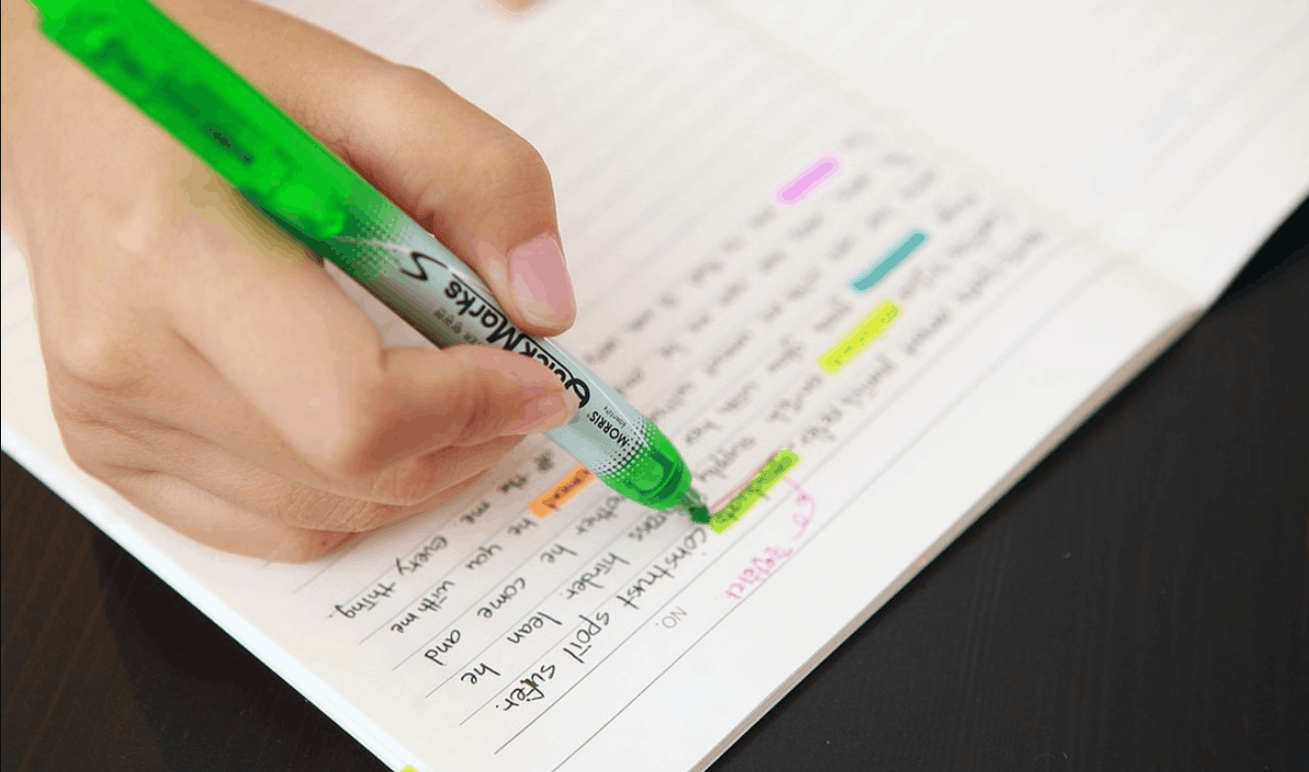
These hybrids are the ultimate “hidden” value in 2026. What are the best 2-in-1 stationery tools for college students? Look for the ones featuring a “Fine-Liner” on one end and a “Chisel-Tip” on the other. Not only does this save space in your bag, but it also ensures your ink colors match perfectly, creating a cohesive aesthetic without trying.
| Tool Type | Individual Cost (Avg) | 2-in-1 Combo Cost | Total Savings |
| Pen + Highlighter | $4.50 | $2.75 | 39% |
| Mechanical Pencil + Eraser | $3.00 | $1.50 | 50% |
| Correction Tape + Glue | $5.50 | $3.25 | 41% |
Paper quality is a scam—at least, the way it’s priced is.
You’ve likely seen those $30 journals with the gold-foiled edges and the fancy brand story on the back. Most of that price tag pays for the marketing team’s lunch, not the actual Paper Density you need to keep your ink from bleeding into a messy soup. I’ve found that the best deals are hidden in “Soft-Cover” minimalist notebooks found in the back corners of office supply chains.
2. Notebook Scouting: Finding 100+ GSM Paper on a Budget
Thickness is everything.
If you can see the text from the previous page while you’re writing, your paper is too thin. I always tell my students to look for the “100 GSM” mark on the back cover. In 2026, many unbranded manufacturers are using high-quality sugar-cane paper or recycled bamboo fibers that feel incredibly smooth but lack the “brand tax” of European labels.
Truth be told, a $4 minimalist notebook with 120 GSM paper is objectively better for your study sessions than a $25 designer book with 80 GSM paper. You want a tool that works, not a trophy that sits on your shelf because you’re too afraid to ruin the first page.
Pro-Tip: The “Opacity Test” When shopping in person, hold the page up to the overhead store lights. If you can clearly see the silhouette of your hand through the sheet, put it back. You’re looking for a “Cloudy” density that keeps your notes private and your pages clean.
3. Repurposing & “Up-Aesthetizing”: DIY High-End Storage
Stop buying plastic trays.
Your kitchen probably contains better desk organizers than anything you’ll find in a “Back to School” aisle. I recently transformed my entire workspace using nothing but glass jars and discarded tins from a local coffee roaster. By removing the labels and applying a quick coat of matte-finish spray paint, you create a cohesive, Scandinavian-style look for about $2.
From Trash to Task
How can I make my cheap stationery look more expensive? Uniformity is the secret. If all your pen cups are the same color—even if they are just old jam jars—they look like a deliberate design choice rather than a collection of random objects.
- Glass Jars: Perfect for washi tape and paperclips.
- Minimalist Tins: Ideal for hiding chargers and loose cables.
- Cardboard Dividers: Cut them to fit your drawers for instant modular organization.
4. The Refill Strategy: The Long-Term Math of “Budget” Luxury
Math is your friend here.
A pack of 12 “disposable” pens might cost $8, but each one will likely end up in a landfill within a month. On the other hand, a single, sturdy Refillable Pen might cost $6 upfront, but the ink refills are pennies. Over the course of a four-year degree, the “expensive” pen actually saves you over $100 in waste.
Here’s the catch: make sure the pen body is a universal fit. In 2026, the most budget-friendly aesthetic pens use “Euro-style” or “G2” refills. This means you can buy a beautiful, weighted barrel from a thrift store or a budget brand and stuff it with the highest-quality ink on the market for less than the price of a candy bar.
The gap between “Cheap” and “Aesthetic” is closing rapidly in 2026.
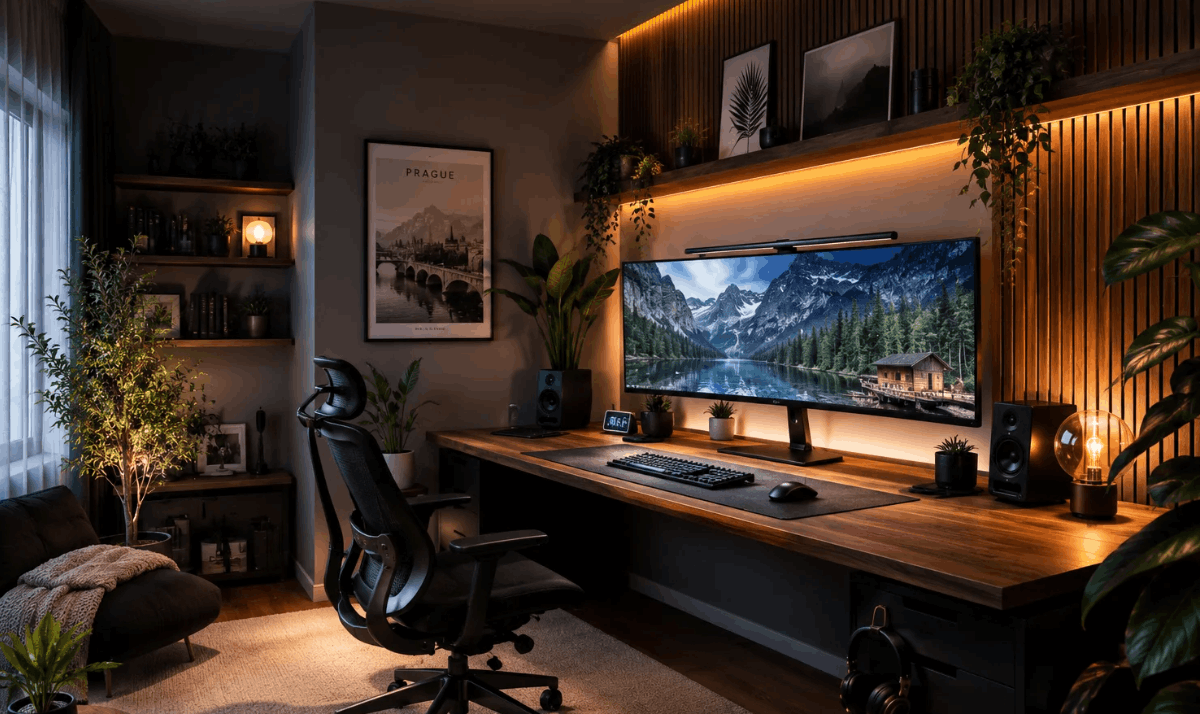
We are seeing a massive influx of value-tier brands that are finally prioritizing paper density and ergonomic weight over flashy branding. Truth be told, you can now build a desk setup that rivals a professional designer’s for the price of two movie tickets. Let’s be real: the secret isn’t finding more money; it’s finding the tools that act as “Digital-Physical Hybrids” to maximize every cent of your budget.
5. Digital-Physical Hybrids: Free Aesthetic Planners and Cheap Hardware
Hybrid systems are the ultimate budget savior.
You don’t need a $40 smart-pen to digitize your life. In 2026, students are using “QR-Link Stickers”—essentially a $2 pack of generic QR codes—to turn a basic A5 Notebook into a smart tracker. You simply stick one on a page, scan it with your phone, and link it to a specific Google Drive folder or a free digital planner template.
Are there free aesthetic digital planner templates that match physical stationery? Yes. Platforms like MyScript and various “Study-gram” creators offer high-quality 2026 PDF planners for free. I recommend downloading a “Minimalist Grey” template; it matches almost any physical stationery palette and looks incredibly professional during internships or group projects.
Expert Insight: The QR-Vault Strategy Create a “Digital Index” on the first page of your cheap notebook. By using QR stickers to link physical pages to digital resources (like lecture recordings or PDF textbooks), you essentially turn a $3 notebook into a high-tech study hub.
6. Comparative Shopping: Top 3 Value Brands for 2026
I’ve audited the 2026 catalogs for the biggest budget players. Here is where you should actually spend your lunch money:
- MUJI (The Minimalist King): Their 2026 undated planners are roughly $7, nearly a quarter of the price of premium “designer” brands. The paper is notoriously smooth and handles gel ink without feathering.
- DAISO (The Aesthetic Underdog): Forget the “dollar store” stigma. Their 2026 “Year of the Horse” collection features matte-finish foundation pens and index tabs that look like high-end boutique finds for under $2.
- MONAMI (The Engineering Pick): This Korean brand is dominating the “Budget-Ergonomic” sector. Their 153 series pens are cheap, refillable, and have a center-of-gravity that rivals professional drafting tools.
Final Verdict: Your Actionable Budget Steps
Stop overcomplicating your desk.
The data confirms that a cluttered workspace leads to cluttered thinking. By adopting a “Capsule” mindset, you can save money and increase your focus simultaneously.
Actionable Steps for Under $15:
- Buy the “Big Three”: One Muji undated planner ($7), one Monami weighted pen ($3), and one set of Daiso pastel highlighters ($2). Total: $12.
- Repurpose Everything: Use an old glass jar for your pens and a shoebox lid as a desk tray. Paint them a single neutral color to unify the look.
- Go Hybrid: Download a free 2026 digital planner and use your physical notebook for “Deep Work” sessions.
- Audit Your Refills: Before your pen dies, check the internal cartridge. Buying a 3-pack of refills is almost always 40% cheaper than buying a new pen body.
Stationery is a tool for your success, not a status symbol. Focus on the Grammage of the paper and the flow of the ink, and the aesthetic will take care of itself. Now, go build that desk and get to work.