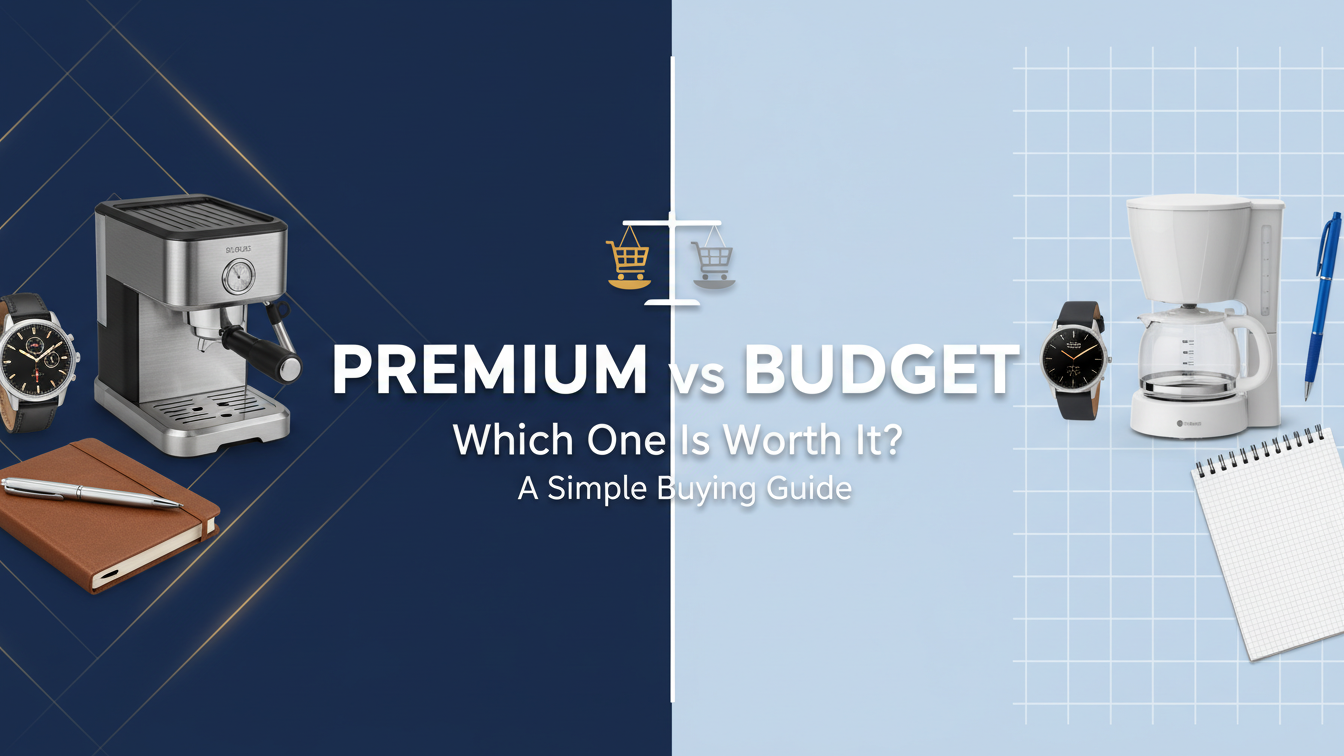
When it’s time to buy something new — whether it’s a phone, shoes, headphones, or kitchen gear — you’ll probably see two main choices: premium (high-end) and budget (more affordable). Both have fans, but how do you decide which one is worth your money?
This guide breaks it down in easy words so you can make smart buying decisions without confusion.
What Does “Premium” Really Mean?
Premium products are usually:
- Made with higher-quality materials
- Packed with better performance
- Designed for longer life
- From well-known brands with strong reputations
Think of premium as top-tier — excellent performance, sleek design, and usually higher prices.
Pros of Premium Products
- Better build quality
- Advanced features
- Longer lifespan
- Often better customer support
Cons of Premium Products
- Cost more
- Sometimes too much for everyday needs
- Features you may never use
What Does “Budget” Really Mean?
Budget products focus on affordability. They’re perfect if you:
- Want good value
- Are shopping with a tight budget
- Need basic features that just work
Budget doesn’t always mean bad — many affordable products now offer great performance for the price.
Pros of Budget Products
- Lower price
- Great for everyday/basic use
- Less risk if you change your mind later
Cons of Budget Products
- May lack premium features
- Sometimes shorter durability
- Lower brand reputation
How to Choose: Practical Tips
Here are simple steps to help you decide between premium and budget.
1. Know Your Real Needs
Ask yourself:
- What do I really need?
- Will I use advanced features?
If you just need basic performance, budget might be enough. If you want top quality or pro-level use, premium makes sense.
2. Think Long-Term vs Short-Term
- Premium is good if you want something that lasts years.
- Budget is fine for short-term use, gifting, or casual users.
3. Check Reviews and Ratings
Look at what real users are saying. Reviews help you know:
- How durable the product is
- Whether features work as promised
- If customer support is good
Good reviews can even make a budget product worth buying!
4. Compare Key Features
Make a simple list:
- Feature A — Premium vs Budget
- Feature B — Premium vs Budget
- Price difference
If the extra features are not useful to you, budget wins.
5. Factor in Brand and Warranty
Some premium brands offer:
- Longer warranties
- Better customer support
- More trust in performance
These can be worth paying extra for.
Real-Life Examples
Here’s how the choice might look in common categories:
Smartphones
- Premium: Top performance, better camera, longer software support
- Budget: Good performance for basic use, less powerful camera
Headphones
- Premium: Noise cancellation, better sound quality
- Budget: Basic sound, fewer features
Kitchen Tools
- Premium: Strong build and long warranty
- Budget: Works fine for everyday cooking
Quick Decision Guide
| Situation | Best Choice |
|---|---|
| You want long-lasting quality | Premium |
| You need something affordable | Budget |
| You use it every day for serious tasks | Premium |
| It’s for casual or occasional use | Budget |
| You want latest technology | Premium |
| You want something simple that works | Budget |
Final Thoughts
There’s no one-size-fits-all answer.
The “worth it” choice depends on your needs, budget, and how you plan to use the product.
- Go premium if quality, performance, and durability matter most.
- Choose budget if you want value and practical performance with smart savings.
Both options can be worth it — it’s all about making the right choice for you.